

A Finance Manager at an Indian Bank Just Transferred ₹2 Crore After Receiving a Video Call From Her ‘CEO’. It Was a Deepfake. It Took 47 Seconds.
A complete guide to deepfake CEO fraud and AI phishing 2026 for enterprises that understand the weakest link in their security isn’t a server, it’s the moment a trusted voice tells someone to act fast.
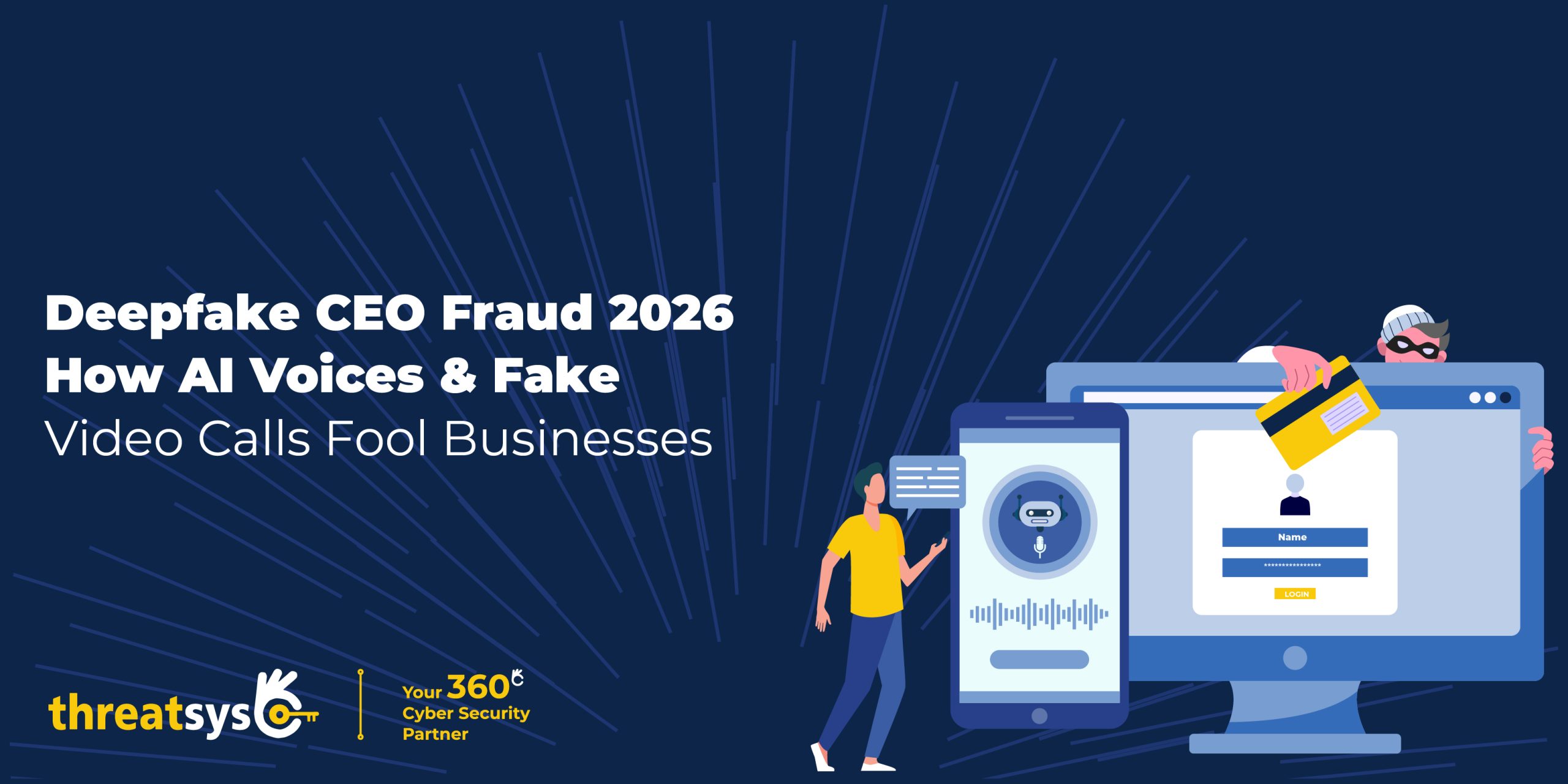
You trained your employees to spot phishing emails the bad grammar, the suspicious links, the urgent tone. And then your finance manager received a video call from your CEO, face and voice indistinguishable from the real thing, instructing an urgent wire transfer. She approved it. The CEO was never on that call.
This is the new reality of social engineering in 2026. Generative AI has collapsed the cost and skill required to impersonate a real person convincingly, in real time, over voice and video. The defenses built for typo-ridden phishing emails do not work against a synthetic version of someone your employees already trust.
Deepfake CEO fraud India 2026 is not a futuristic threat. It is happening in finance departments across the country right now and the organisations that haven’t rebuilt their verification processes around this reality are exposed.
The New Face of Phishing
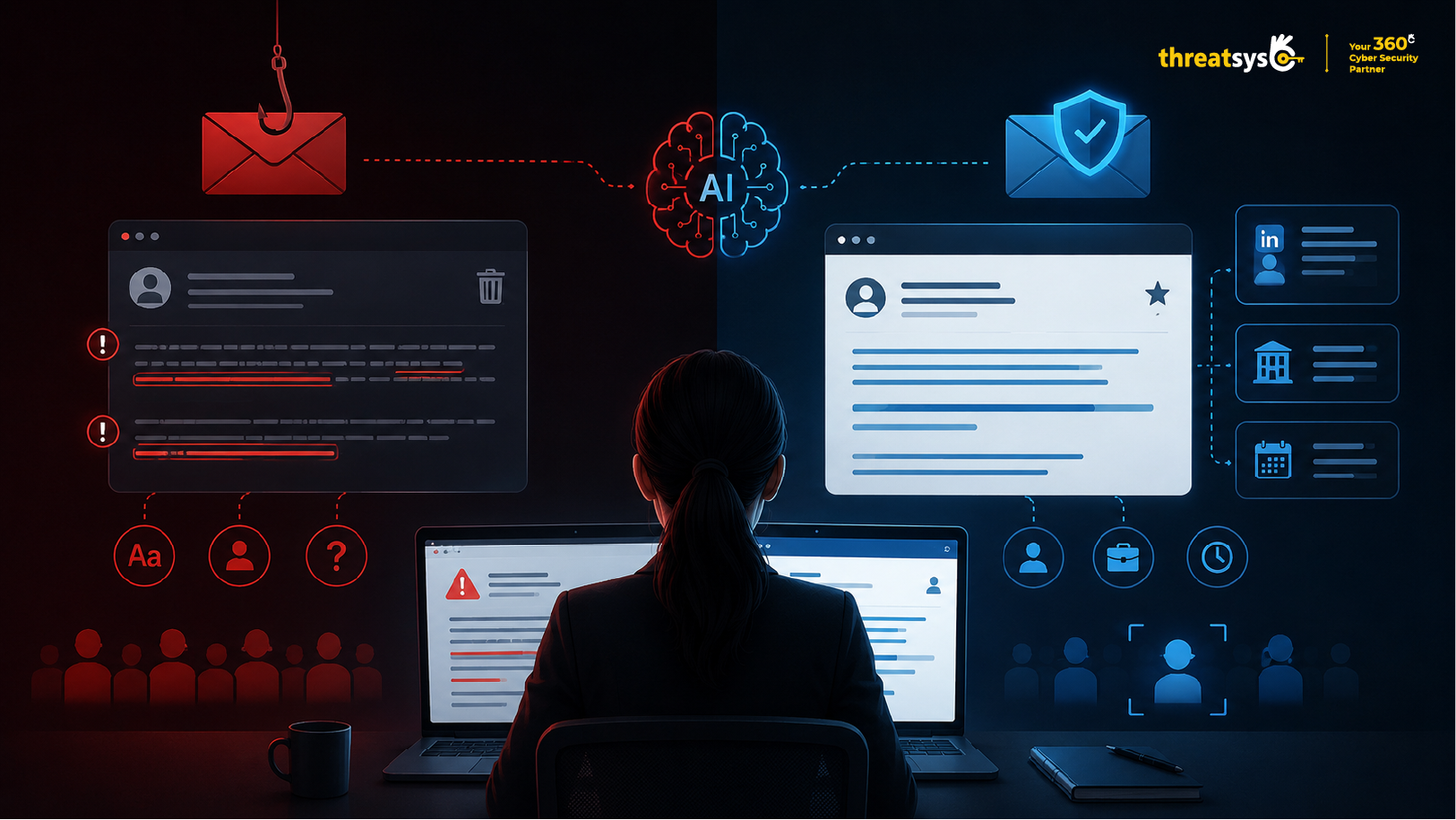
Phishing used to be a numbers game send a thousand generic emails, hope a handful of recipients click. AI has turned it into a precision instrument.
Generative AI can now mimic a company’s internal writing style after analysing a handful of leaked or scraped emails. It can clone a CEO’s voice from as little as three seconds of audio pulled from a public earnings call, a conference keynote, or a LinkedIn video. And real-time video deepfake tools can now generate a convincing live video call of an executive’s face, synced to a cloned voice, with latency low enough to sustain a real conversation.
What changed in 2026 is not the existence of these capabilities, it’s their accessibility. Tools that once required research-lab compute and expertise are now available as commercial or even free services, lowering the barrier for attackers from nation-state actors to opportunistic criminal groups targeting mid-sized Indian businesses.
The result is an attack surface built entirely around exploiting trust in a familiar voice or face something no firewall or spam filter was designed to catch.
Why AI Phishing Is So Effective
The numbers explain why attackers have pivoted so aggressively toward AI-powered social engineering. AI-generated phishing campaigns are seeing click-through rates around 54%, compared to roughly 12% for traditional phishing attempts.
Three factors drive that gap:
- Personalisation at scale — AI can scrape an employee’s LinkedIn, recent company announcements, and internal jargon to craft a message that feels specifically written for them, not mass-blasted
- Contextual accuracy — AI-generated lures reference real projects, real deadlines, and real organisational structure, making the pretext indistinguishable from a legitimate internal request
- Grammatically flawless delivery — the broken English and awkward phrasing that used to be the easiest tell of a phishing email has been eliminated entirely by large language models
“Security awareness training spent a decade teaching people to spot bad grammar and generic greetings. AI phishing has neither. The tell employees were trained to look for no longer exists.”
The shift from spray-and-pray to precision-targeted, AI-crafted social engineering means the old detection heuristics, odd phrasing, mismatched names, generic salutations are no longer reliable signals.
Types of AI-Powered Attacks
AI-powered social engineering spans a range of techniques, each exploiting a different channel of trust. Understanding the full spectrum helps security teams build layered defences rather than a single point solution.
| Attack Type | Channel | What It Exploits |
| AI Spear Phishing | Email, personalised at scale | Contextual accuracy and flawless, individually tailored writing |
| Vishing (Voice Cloning) | Phone calls using cloned voices | Recognition of a familiar, trusted voice |
| Deepfake Video Calls | Live video conferencing | Visual and auditory confirmation of identity in real time |
| Polymorphic Malware | Email attachments, downloads | Signature-based detection — the code rewrites itself to evade scanners |
| AI-Generated BEC Emails | Business email compromise | Internal writing style and organisational context to authorise fraud |
Polymorphic malware deserves particular attention: AI-assisted code generation now allows malware to rewrite its own structure on each execution, defeating signature-based antivirus and requiring behavioural detection instead. Combined with AI-generated BEC emails that mimic a CFO’s actual writing patterns, attackers are now able to chain a deepfake video call with a perfectly worded follow-up email building a layered, mutually reinforcing deception.
Real Incidents in India
Deepfake-enabled fraud against Indian companies is no longer a hypothetical risk , finance teams have already been targeted by live deepfake video calls impersonating CFOs and CEOs to authorise wire transfers.
The pattern across these incidents is consistent. An employee in finance or accounts receives what appears to be a video call or voice call from a senior executive often timed during travel, a board meeting, or another period when the real executive would be plausibly unreachable for verification. The synthetic executive references a real, time-sensitive business context — an acquisition, a vendor payment, a regulatory deadline and instructs an urgent transfer, often emphasising confidentiality to discourage the employee from checking with colleagues.
What makes these incidents difficult to prevent through awareness alone:
- The urgency and authority dynamic exploits an employee’s reluctance to question a senior executive
- Confidentiality framing “don’t loop in the team yet” actively discourages the verification steps that would catch the fraud
- The video and voice quality is now good enough that visual or auditory suspicion alone is an unreliable defence
- Attacks are increasingly timed around plausible real-world events, travel, mergers, earnings season making the pretext credible
These incidents are not isolated. As deepfake tooling becomes cheaper and more accessible, finance and accounts teams at Indian companies of every size not just large enterprises are becoming viable targets.
How to Detect a Deepfake
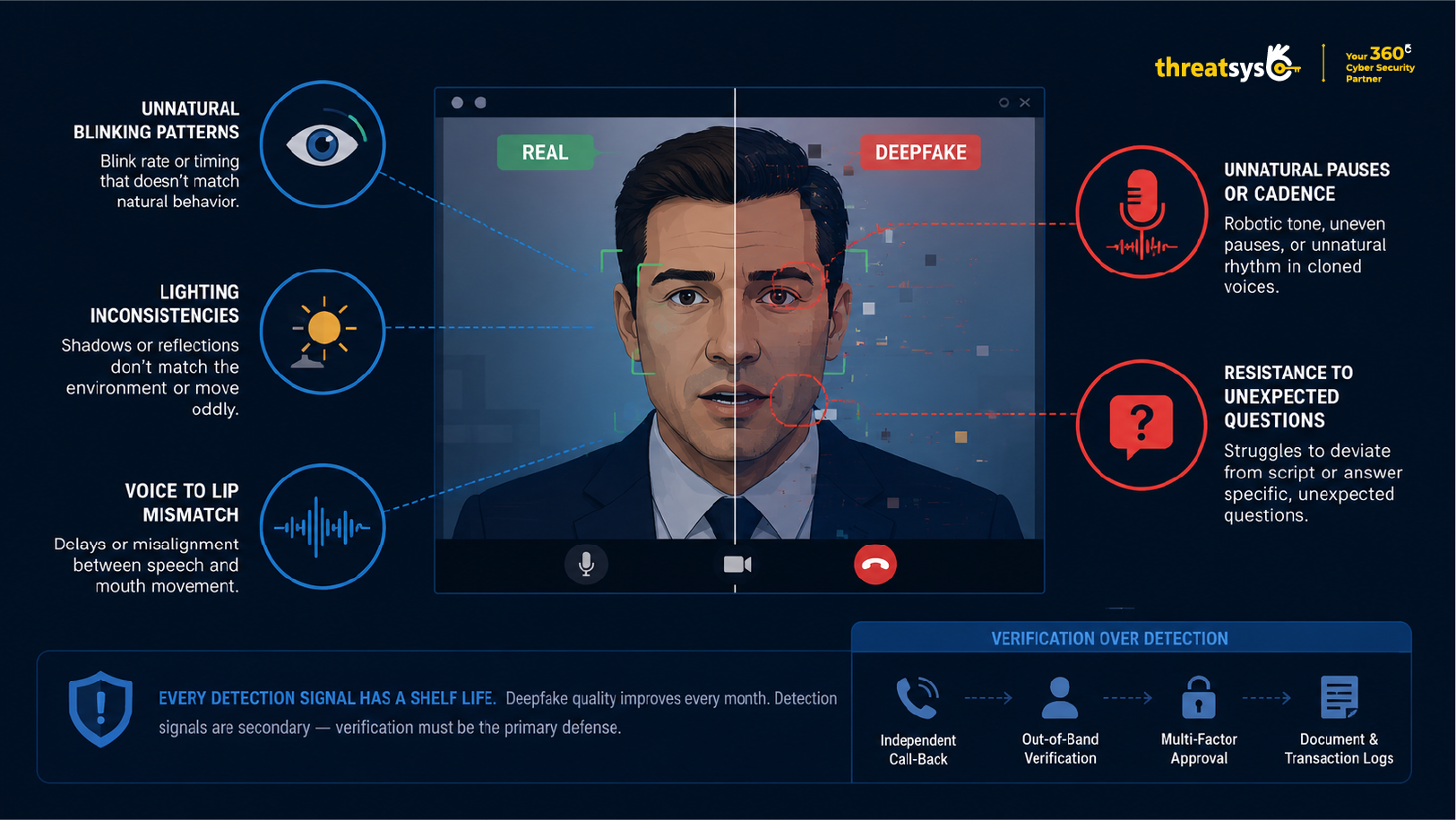
Detection signals still exist but they are narrowing every month as generative AI quality improves, and they should be treated as a secondary layer, not a primary defence.
Current visual and behavioural tells include:
- Unnatural blinking patterns — early deepfake models struggled to replicate natural blink frequency, though this gap is closing
- Lighting inconsistencies — shadows or reflections on the face that don’t match the stated environment or move oddly as the head turns
- Voice-to-lip-movement timing mismatches — subtle delays or misalignment between audio and mouth movement, particularly under network compression
- Unnatural pauses or robotic cadence in cloned voices, especially during unscripted, reactive conversation
- Resistance to specific, unexpected questions — many real-time deepfake tools struggle when asked to deviate from a scripted pretext
“Every detection signal on this list has a shelf life. The deepfake quality that gave away an attack in January is routinely fixed by the next model update. Detection cannot be the strategy verification has to be.”
Because visual and auditory detection is a constantly eroding defence, organisations cannot rely on employees being able to spot a fake. The control has to sit in process, not perception.
Organisational Defences
The most effective defences against deepfake fraud are procedural, not technical , they remove the decision from a single employee’s judgment in the moment and replace it with a verification step that a deepfake cannot bypass.
Core organisational controls:
- Verbal code words , a pre-agreed, regularly rotated phrase known only to authorised personnel, required to authenticate any high-value financial instruction given verbally or over video
- Multi-person approval for wire transfers , no single employee, regardless of seniority of the requester, should be able to authorise a significant transfer alone
- Callback verification protocols any urgent financial request received via call or video must be independently verified by calling back on a known, pre-stored number, never a number provided in the same interaction
- Mandatory cooling-off periods for first-time or unusual payment requests, regardless of stated urgency
- Explicit policy that confidentiality requests do not override verification steps — “don’t tell anyone” should itself be treated as a red flag
These controls work because they don’t depend on an employee correctly identifying a deepfake in the moment of pressure. They create a structural checkpoint that has to be satisfied regardless of how convincing the impersonation is.
Technical Defences
Procedural controls need to be backed by technical infrastructure that reduces the chance an AI-powered social engineering attempt reaches an employee in the first place, and limits what an attacker can do even if it succeeds.
Key technical defences for 2026:
- AI-powered email security — detection systems that use behavioural and contextual analysis rather than signature matching, since AI-generated phishing emails are grammatically clean and signature-evasive
- Phishing-resistant MFA — hardware security keys or FIDO2-based authentication that cannot be defeated by a convincing phone call or video, unlike OTP-based MFA which remains vulnerable to social engineering
- Conditional access policies — restricting high-risk actions, like initiating large transfers, based on device, location, and behavioural risk signals, not identity alone
- Continuous authentication — monitoring behavioural patterns throughout a session rather than relying on a single login event, so an anomalous action mid-session can trigger re-verification
- Voice and video authentication watermarking for internal executive communications, where feasible, to provide a cryptographic basis for verifying genuine video or audio
None of these technical controls is sufficient alone. Together with verbal code words and callback verification, they create overlapping layers that a deepfake attack has to defeat simultaneously , not just one.
Employee Training
Traditional security awareness training was built around teaching employees to recognise the visible flaws of low-effort phishing, bad grammar, generic greetings, suspicious links. AI phishing has eliminated nearly all of those tells, which means training built on spotting them is now training employees to trust attacks they shouldn’t.
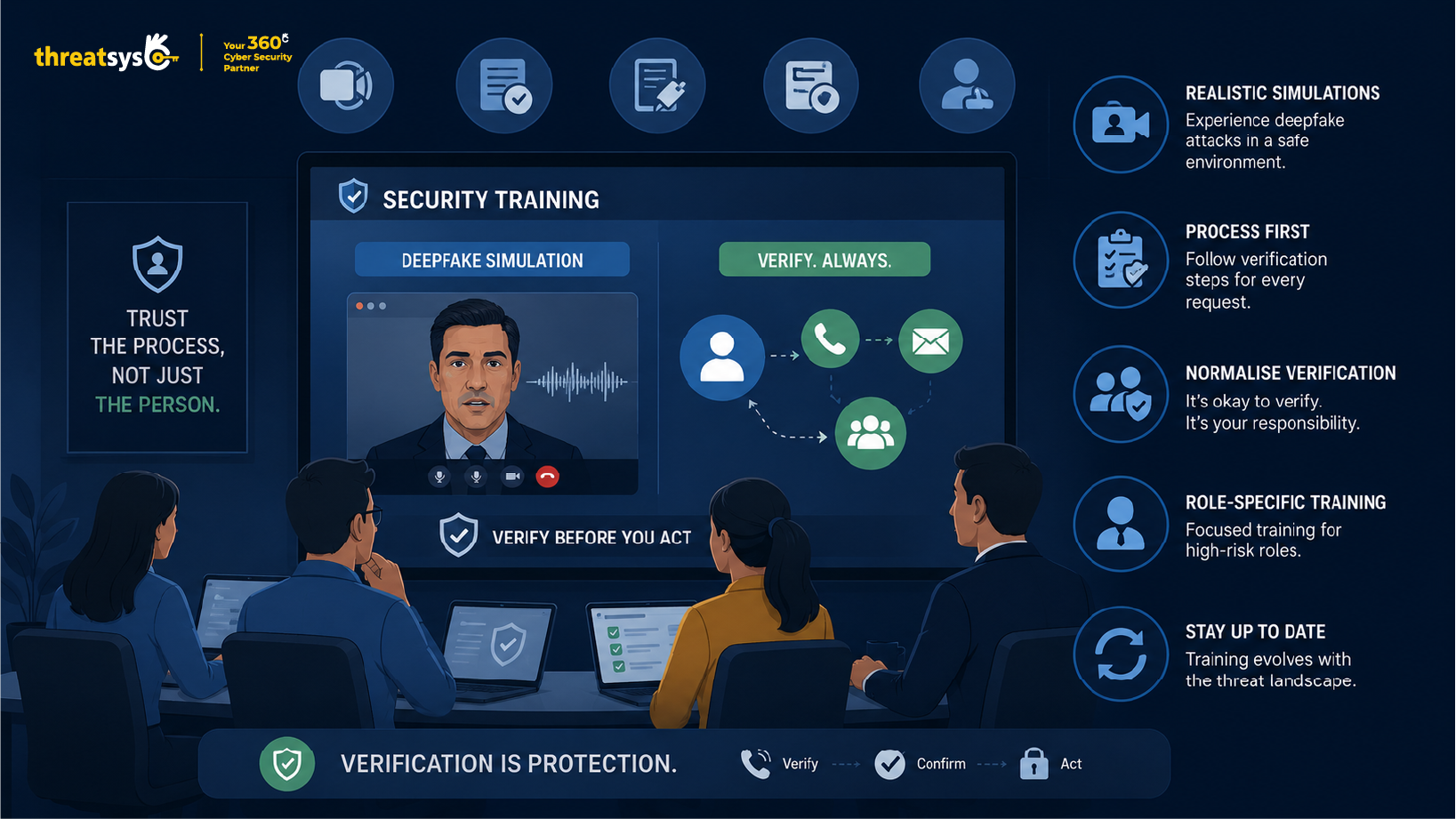
Effective training in 2026 looks fundamentally different:
- Simulated deepfake exercises — running realistic, controlled deepfake voice or video simulations so employees experience what a real attack feels like, not just a description of one
- Process-first messaging — training that emphasises following verification procedure regardless of how convincing the request seems, rather than training people to “spot the fake”
- Removing the social penalty for verification — explicitly normalising and rewarding employees who pause to verify a request from a senior executive, even when it turns out to be genuine
- Role-specific training for finance, accounts, and executive assistants — the employees most likely to be targeted need deeper, more frequent training than general staff
- Regular updates reflecting current deepfake capability — training content from even six months ago may reference detection tells that no longer apply
The goal of training in the AI phishing era is not to make employees better lie detectors. It’s to make them confident that following verification process, every time, without exception, is the expected and protected behaviour.
Regulatory Context
Indian regulators are beginning to build reporting and oversight obligations specifically around the kind of social engineering and fraud that AI has accelerated.
CERT-In’s Six-Hour Reporting Requirement
CERT-In‘s incident reporting directions require certain categories of cybersecurity incidents, including social engineering and fraud-related incidents, to be reported within six hours of detection. For organisations targeted by deepfake-enabled fraud, this means the incident response clock starts the moment the fraudulent transfer is identified, not after internal investigation concludes , making fast detection and a pre-built response plan essential.
RBI Guidance on Fraud Prevention in Banking
The Reserve Bank of India’s guidance on fraud risk management places explicit obligations on banks and financial institutions to implement robust authentication and transaction verification controls, particularly for high-value transfers. As deepfake-enabled fraud increasingly targets exactly these transactions, RBI-regulated entities are expected to demonstrate that their verification processes account for AI-enabled impersonation risk, not just traditional fraud patterns.
Together, these regulatory pressures mean that deepfake fraud preparedness is no longer purely a security best practice , it is becoming a compliance expectation, with reporting timelines and control obligations attached.
How Threatsys Helps Defend Against AI Social Engineering

Defending against deepfake fraud and AI phishing requires testing your people and processes against the same techniques attackers are actually using not generic awareness content. Threatsys works with Indian enterprises to build defences calibrated to the AI threat landscape as it exists today.
Social Engineering Assessments
Threatsys’s social engineering assessments simulate real-world AI-powered attacks ,including voice phishing and deepfake-style pretexting scenarios against your finance, executive support, and IT teams, identifying exactly where verification processes break down under pressure.
Corporate Cybersecurity Training
Threatsys‘s corporate training programmes are built around the realities of 2026 AI phishing, moving beyond “spot the bad email” content toward process-first training, simulated deepfake exercises, and role-specific modules for the employees most likely to be targeted.
Managed Security Services
Threatsys‘s managed security services help organisations implement the technical layer of defence , AI-powered email security, phishing-resistant MFA rollouts, and conditional access policies , so that fewer AI-crafted lures reach an employee’s inbox or call screen in the first place.
CYQER Behavioural Monitoring
CYQER, Threatsys’s continuous monitoring platform, flags anomalous financial transaction patterns, unusual approval behaviour, and high-risk account activity in real time providing a technical backstop that catches fraudulent transfers even when a deepfake successfully deceives an employee in the moment.
From social engineering assessments to employee training to continuous behavioural monitoring ,Threatsys covers the full AI social engineering defence lifecycle, built around how attackers are actually operating against Indian companies in 2026.
Conclusion
The next fraudulent wire transfer at an Indian company will not be authorised because an employee was careless. It will be authorised because the request came from a face and voice that were, in every way the employee could perceive, completely real.
Deepfake CEO fraud and AI phishing 2026 is not a problem that better employee vigilance alone can solve. The technology has moved past the point where detection by sight or sound is a reliable defence. What stops these attacks is process verification steps that don’t depend on recognising a fake, paired with technical controls and training built for the threat as it actually exists today.
The organisations that rebuild their verification processes around this reality will catch the fraud before the transfer clears. The ones still relying on employees to spot bad grammar will find out, in 47 seconds, exactly how far the technology has come.
The CEO on that video call was never on that video call. Build a process that catches that , because your employees, however well trained, won’t be able to.
Stay secure, stay aware with Threatsys.