
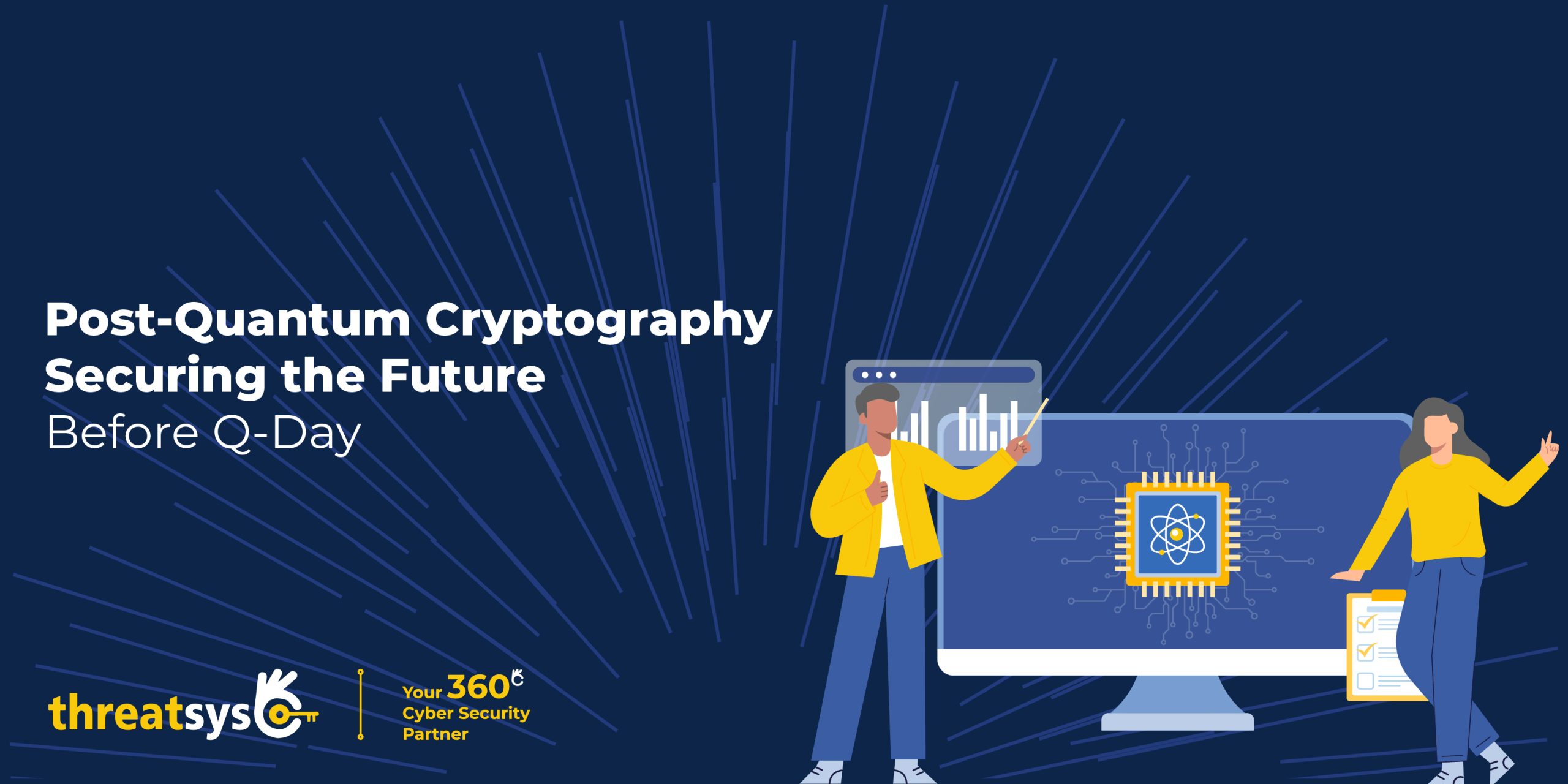

The encryption protecting your data today may not hold up tomorrow. Here’s what Q-Day means for Indian enterprises and how to get ahead of it.
For decades, encryption has quietly protected everything from bank transactions and hospital records to government communications and corporate secrets. RSA and Elliptic Curve Cryptography (ECC) became the backbone of digital trust and for classical computers, they still hold up.
Quantum computers change that equation entirely.
Unlike classical machines, quantum computers can solve certain mathematical problems at a scale that makes today’s encryption look like a padlock on a screen door. The moment a sufficiently powerful quantum computer arrives ,what researchers call Q-Day much of the cryptography the world depends on could become breakable. And that day, while not here yet, is closer than most enterprises realize.
For Indian enterprises in banking, healthcare, government, and IT, post-quantum cryptography 2026 is no longer a theoretical discussion. It is a planning requirement.
What Is Q-Day and Why Should Enterprises Care?
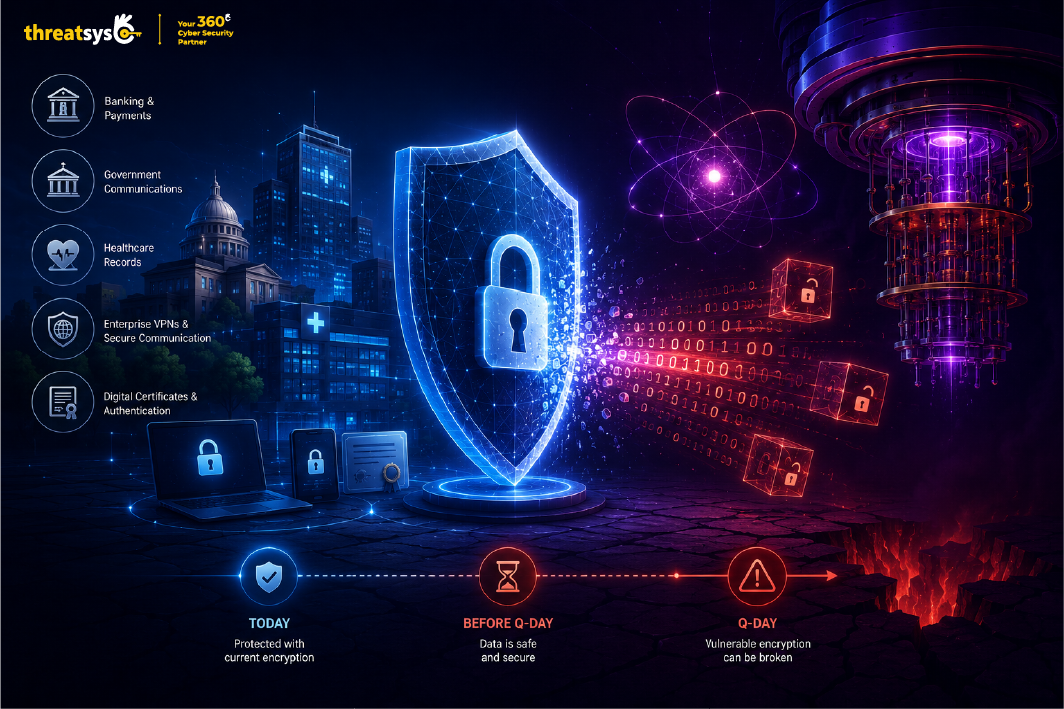
Q-Day is the point at which quantum computers become powerful enough to break RSA-2048, ECC, and other widely used public-key cryptographic algorithms within a practical timeframe.
When that happens, systems depending on these algorithms for secure communication, digital signatures, and authentication will need to have already migrated to quantum-resistant alternatives. The organizations that haven’t will be exposed.
What’s at risk:
- Online banking transactions and payment infrastructure
- Government communications and classified systems
- Healthcare records and clinical databases
- Enterprise VPNs and secure communication channels
- Digital certificates and authentication systems
None of this collapses on Q-Day itself but any data encrypted with vulnerable algorithms before that date becomes retroactively exposed. That’s the real threat.
The Threat That’s Already Happening: Harvest Now, Decrypt Later
Here’s the part most enterprises miss: the attack has already started. Nation-state actors and sophisticated threat groups are running what’s called Harvest Now, Decrypt Later (HNDL) campaigns ,collecting encrypted data today with no ability to read it, banking on quantum capability arriving within a decade.
If your organization is generating sensitive data right now financial records, intellectual property, patient data, strategic plans that data is potentially already being stored by adversaries waiting for Q-Day.
Long-lived sensitive data is the highest-risk category:
- Intellectual property and R&D data
- Government and defence records
- Multi-year financial transaction histories
- Healthcare and patient information
- Customer databases and strategic communications
“The threat is not future-tense. Data being encrypted today may be sitting in an adversary’s storage, waiting for a quantum computer to arrive.”
NIST’s Post-Quantum Standards What You Need to Know
The U.S. National Institute of Standards and Technology (NIST) finalized the first set of post-quantum cryptographic standards in 2024, after nearly a decade of evaluation. These are the algorithms organizations should be building migration plans around:
| Algorithm | Type | Purpose |
| ML-KEM | Key Encapsulation | Secure key exchange |
| ML-DSA | Digital Signature | Authentication & signing |
| SLH-DSA | Digital Signature | Backup signature method |
| RSA / ECC (current) | Legacy | At risk from Q-Day |
These aren’t experimental they are ratified standards with clear implementation guidance. The question for Indian enterprises is not whether to adopt them, but when and in what order.
Regulations Are Moving Don’t Get Caught Flat-Footed
Post-quantum readiness is entering the regulatory mainstream faster than most compliance teams are tracking.
The US has issued directives requiring federal agencies to begin PQC migration. The EU is building quantum-safe requirements into its cybersecurity frameworks. Sectors like finance and critical infrastructure are seeing early-stage guidance from regulators globally.
For Indian enterprises operating internationally or serving clients in regulated markets the compliance window is already open. Organizations that begin cryptographic agility planning now will have a significant advantage when India’s own regulatory guidance catches up, particularly for sectors already under RBI, CERT-In, and DPDP Act oversight.
Starting early means migrating on your own schedule. Waiting means migrating on a regulator’s deadline.
Which Indian Industries Face the Greatest Quantum Risk?
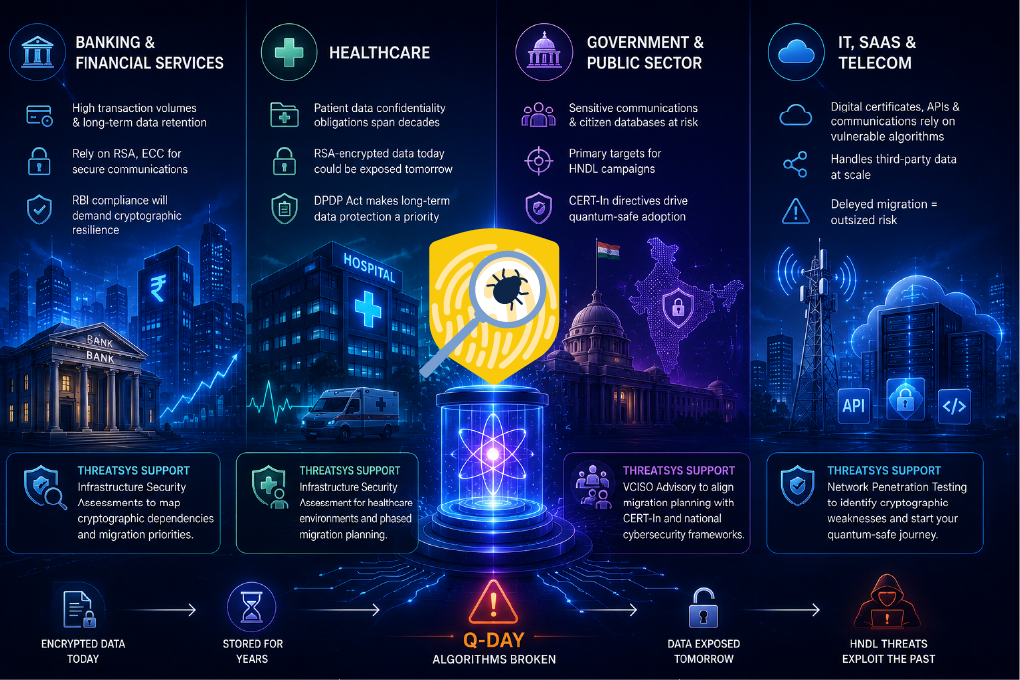
Banking & Financial Services
Banks encrypt everything, transactions, customer authentication, payment rails, internal communications. RSA and ECC are embedded throughout. The financial sector also retains data for years, which means HNDL exposure is significant. RBI compliance will eventually require cryptographic resilience.
Threatsys supports BFSI organizations through Infrastructure Security Assessments that map current cryptographic dependencies and identify the highest-risk migration priorities.
Healthcare
Patient records carry a confidentiality obligation that can span decades. A record encrypted today under RSA could be exposed years from now if Q-Day arrives and migration hasn’t happened. Healthcare organizations under DPDP Act obligations need to treat long-term data protection as a planning priority today.
Threatsys’s Infrastructure Security Assessment covers healthcare environments specifically , identifying where patient data is encrypted, how certificates are managed, and what a phased migration path looks like.
Government & Public Sector
Sensitive government communications, citizen databases, and national infrastructure systems are primary targets for HNDL campaigns. CERT-In’s evolving directives will increasingly push public sector organizations toward quantum-safe practices.
Threatsys’s VCISO Advisory helps government agencies align cryptographic migration planning with CERT-In requirements and broader national cybersecurity frameworks.
IT, SaaS & Telecom
Software platforms, cloud providers, and telecom operators sit at the intersection of every other sector’s data. Digital certificates, API security, and encrypted communications all rely on algorithms that will eventually need replacing. Organizations that handle third-party data at scale carry outsized risk if migration is delayed.
Threatsys supports IT and SaaS teams through Network Penetration Testing that surfaces cryptographic weaknesses in existing infrastructure giving teams a clear starting point for quantum-safe planning.
Start with a Cryptographic Inventory
Before adopting post-quantum algorithms, organizations need to understand where encryption lives across their environment. Most enterprises don’t have this visibility and without it, migration planning is guesswork.
A proper cryptographic inventory covers:
- Encryption algorithms currently deployed across applications and infrastructure
- Digital certificates and their expiry timelines
- VPN and secure communication protocols
- Key management systems and their dependencies
- Third-party software and vendor cryptographic dependencies
- Legacy systems running outdated or deprecated cryptography
This inventory becomes the foundation of everything that follows, prioritization, phasing, vendor negotiations, and compliance reporting.
A Practical PQC Migration Roadmap
Phase 1: Assessment (2026)
- Conduct a full cryptographic inventory
- Identify high-risk systems and long-lived data
- Evaluate vendor and platform readiness for PQC
- Prioritize migration targets by risk and operational impact
Phase 2: Hybrid Deployment (2027–2028)
- Test post-quantum algorithms alongside existing cryptography
- Validate interoperability across systems and partners
- Update security architectures and key management practices
- Begin staff training and governance framework updates
Phase 3: Full Migration (2029–2030)
- Transition critical systems to quantum-resistant standards
- Retire deprecated cryptographic components
- Monitor performance, compliance, and emerging NIST guidance
- Establish ongoing cryptographic agility as a practice
The goal of phasing is to avoid the worst outcome: a forced, rushed migration under regulatory pressure or after a quantum-enabled breach. Organizations that start in 2026 have time to do this properly.
Common Myths Slowing Down PQC Adoption
“Quantum computers are still decades away.”
Timelines remain uncertain but enterprise-scale cryptographic migrations routinely take 3–5 years for large organizations. Waiting for certainty on Q-Day timing before starting migration is not a strategy. It’s a gamble.
“We’ll upgrade when the time comes.”
Cryptography is deeply embedded in enterprise infrastructure, operating systems, network hardware, third-party software, HSMs, cloud platforms. Replacing it is not a patch cycle. It is a multi-year architectural project. Organizations that wait until Q-Day is imminent will not have time.
“Only governments and banks need to worry.”
Any organization holding sensitive customer data, intellectual property, or regulated records has exposure. The HNDL threat does not discriminate by sector , it targets any encrypted data worth decrypting eventually.
What This Means for Indian Enterprises Specifically
India’s digital infrastructure is expanding at a pace that outstrips most security planning cycles. The same UPI transaction volumes, Aadhaar integrations, and cloud-first IT strategies that drive growth also increase quantum exposure, because they generate encrypted data at massive scale, every day.
For sectors under RBI, CERT-In, and DPDP Act oversight, cryptographic agility is not just a future-proofing exercise. It is becoming a compliance requirement. Organizations that treat post-quantum cryptography India 2026 as a planning priority will be ahead of both the threat and the regulatory curve.
“The enterprises that act in 2026 will migrate on their own terms. The ones that wait will migrate on a deadline or after an incident.”
How Threatsys Helps Organizations Prepare for the Quantum Era

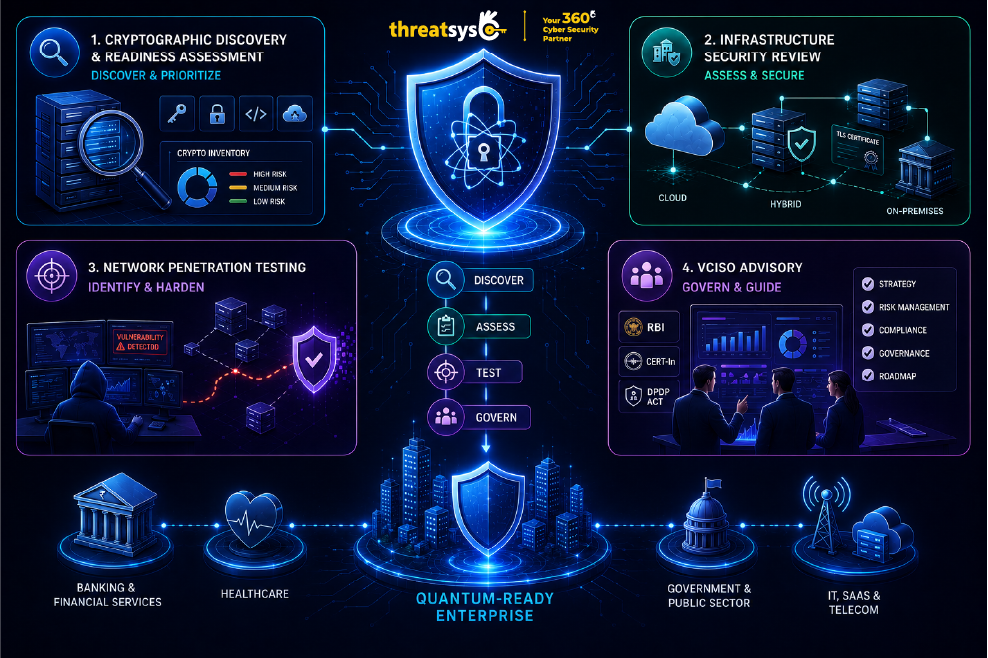
Post-quantum readiness is not a single project , it is a multi-year programme that requires visibility, expertise, and a governance structure to hold it together. Threatsys works with Indian enterprises to build that foundation, starting with where they actually are today.
Cryptographic Discovery & Readiness Assessment
Threatsys maps where encryption lives across your applications, infrastructure, and business processes , building a prioritized inventory that becomes the basis for your entire migration roadmap. No guesswork. No assumptions.
Infrastructure Security Review
Threatsys’s Infrastructure Security Assessment evaluates cloud, hybrid, and on-premises environments for cryptographic gaps, misconfigured certificates, legacy algorithm dependencies, and third-party exposure ,giving teams a clear picture of quantum risk across the full stack.
Network Penetration Testing
Threatsys’s Network Penetration Testing identifies how attackers could exploit existing cryptographic weaknesses today ,before quantum capability makes that task easier. The findings directly inform migration prioritization and architectural hardening.
VCISO Advisory
A post-quantum migration touches procurement, compliance, architecture, and executive risk decisions simultaneously. Threatsys’s VCISO Advisory provides the strategic leadership to align the programme with RBI, CERT-In, and DPDP Act requirements and keep it on track across phases.
From cryptographic inventory to infrastructure hardening to compliance alignment , Threatsys covers the full post-quantum readiness journey, built around your environment and timeline.
Conclusion
Quantum computing is not science fiction anymore. It is an engineering problem being solved and the timeline is compressing faster than most enterprise security roadmaps anticipate.
The encryption protecting your most sensitive data today was not designed to survive Q-Day. The good news is that quantum-resistant alternatives exist, standards are finalized, and the migration path is clear. What’s missing in most organizations is simply the decision to start.
Post-quantum cryptography India 2026 is the right moment to begin. Not because Q-Day is imminent but because the organizations that act now will have the time to do it properly. The ones that wait will not.
“In cybersecurity, the best time to prepare is always before the threat becomes reality.”
Stay secure, stay aware with Threatsys.