

Cyberattacks on India’s capital markets have increased sharply over the past few years. From DDoS attempts on trading platforms to credential theft targeting brokers, attackers are actively trying to exploit any vulnerability that can disrupt market integrity or expose investor data.
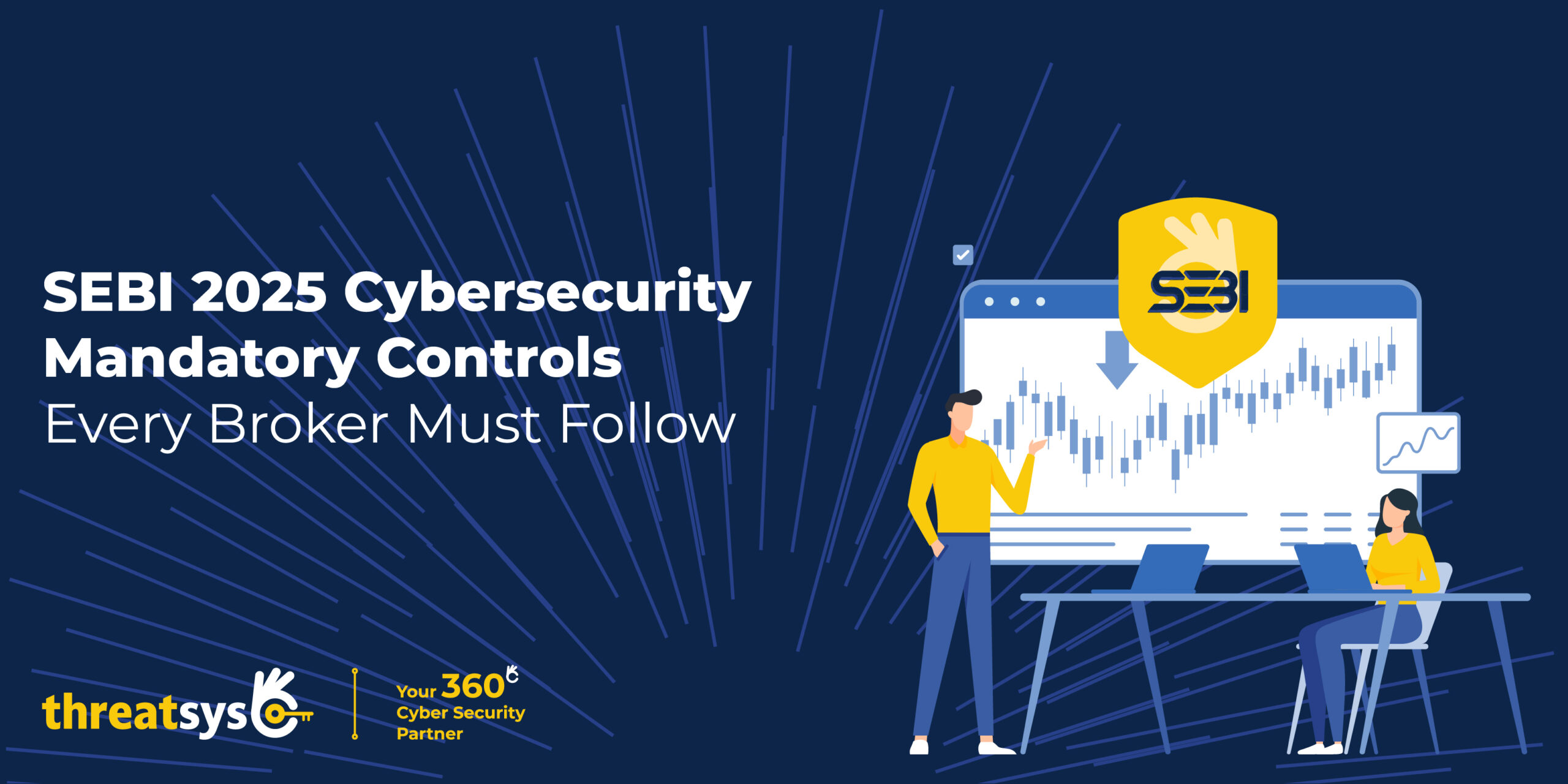
To strengthen the security posture of brokers and other market intermediaries, SEBI has upgraded its Cyber Security & Cyber Resilience Framework (CSCR) for 2025. The new guidelines focus on stronger governance, proactive detection, faster reporting, rigorous testing, and robust cyber resilience.
This blog breaks down the 2025 framework in a simple, practical, and compliance-ready format,helping brokers understand what’s required and how to stay audit-ready.
Why SEBI Strengthened the CSCR Framework in 2025

The financial ecosystem runs on speed, trust, and uninterrupted availability. Even a few minutes of downtime in a brokerage platform can lead to losses, panic, regulatory penalties, and reputational damage.
SEBI’s 2025 revision aims to:
- Reduce cyber risks across trading, clearing, and settlement ecosystems
- Ensure business continuity even during high-impact cyber incidents
- Improve visibility, monitoring, and incident reporting
- Create a uniform cyber maturity baseline across brokers
In short: Zero tolerance for weak cyber hygiene.
The 2025 Compliance Checklist for Brokers
Below is the complete, section-wise checklist mapped to SEBI’s updated expectations.
1. Strengthened Governance & Security Leadership
SEBI now expects cybersecurity to be driven from the top.
Brokers must:
- Appoint a qualified Chief Information Security Officer (CISO)
- Publish a Board-approved Cybersecurity & Cyber Resilience Policy
- Review cybersecurity posture quarterly with senior management
- Define clear responsibilities for IT, SOC, risk, and compliance
Strong governance = stronger resilience.
2. Asset Identification & Data Mapping
No cybersecurity program is effective unless you know what you’re protecting.
Brokers need:
- A real-time IT Asset Inventory of laptops, servers, cloud, network devices
- Data classification (Public, Internal, Confidential, Restricted)
- Clear identification of critical systems such as OMS, RMS, trading platforms, DP systems
- Automated discovery tools to detect unauthorized assets
This ensures no shadow system becomes an attack entry point.
3. Access Control & Identity Security
Unauthorized access remains the top cause of breaches.
SEBI mandates:
- MFA for all critical systems
- Periodic (90-day) user access reviews
- Revocation of inactive or unnecessary accounts
- Role-Based Access Control (RBAC)
- Securing privileged accounts using PAM solutions
The goal is simple: Access only what you need. Nothing more.
4. Network & Infrastructure Security Hardening
Brokers must protect all communication and transaction layers with strong defenses.
The 2025 requirements include:
- Next-Gen Firewalls, IDS/IPS, and web filtering
- Half-yearly firewall rule reviews
- Network segmentation separating critical systems
- Secured VPN configurations for remote employees
- DDoS protection for trading portals
A defensible network reduces the blast radius during an attack.
5. Application Security (Trading Platforms, Mobile Apps, APIs)
With broker apps becoming a primary trading channel, application security is now non-negotiable.
SEBI expects:
- VAPT twice every year
- Secure code reviews for in-house development
- WAF implementation for web applications
- Strong API authentication & rate limiting
- 30-day SLA for patching critical vulnerabilities
This protects against injection attacks, broken authentication, and API abuse.
6. Endpoint & Server-Level Protection
Endpoints are often the easiest point of compromise.
Mandatory controls include:
- EDR/XDR installed on all endpoints and servers
- Patch OS and applications within 7–15 days
- Device encryption on laptops storing investor data
- Block unauthorized USB devices
- Real-time anti-malware scanning
Every endpoint must be treated as a potential attack surface.
7. Cyber Resilience, DR, and Business Continuity
SEBI wants brokers to recover quickly from incidents.
Requirements:
- A fully functional Disaster Recovery (DR) site
- DR drills twice per year
- A Board-approved Business Continuity Plan (BCP)
- 3-2-1 backup strategy (onsite + offsite + offline)
- RTO/RPO values aligned with SEBI guidelines
Cyber resilience is as critical as prevention.
8. Logging, SOC Monitoring & Threat Detection
Continuous visibility is essential for timely response.
Brokers must:
- Maintain a 24/7 SOC or outsourced SOC setup
- Forward logs from critical systems to a SIEM platform
- Retain logs for a minimum of 2 years
- Monitor for anomalies, brute-force attempts, insider threats, and data exfiltration
- Use threat intelligence to detect evolving attacker patterns
Proactive detection = reduced breach impact.
9. Incident Management & Mandatory SEBI Reporting
SEBI requires extremely fast incident disclosure.
Brokers must:
- Maintain a formal Incident Response Plan (IRP)
- Conduct annual IR drills
- Report cyber incidents to SEBI within 6 hours
- Document RCA and share mitigation steps
Fast reporting helps protect the larger market ecosystem.
10. Vendor & Third-Party Risk Management
Third-party apps, cloud services, and fintech integrations increase exposure.
Checklist includes:
- Annual vendor security assessments
- Security clauses in all contracts
- Ensure vendors comply with ISO 27001 or similar frameworks
- Perform third-party audits for critical vendors
A chain is only as strong as its weakest link.
11. Employee Awareness & Human Risk Management
Even the best tools can’t prevent human mistakes.
SEBI requires:
- Quarterly cybersecurity training
- Regular phishing simulations
- Role-based security training for privileged users
A trained workforce is your strongest defense.
How Threatsys Helps Brokers Stay SEBI-Compliant in 2025

SEBI’s 2025 CSCR framework can be complex to implement, especially for brokers handling high-volume trading systems and sensitive investor data. Threatsys simplifies this with a focused, end-to-end approach.
We support brokers through:
- Gap Assessment & Policy Alignment – Mapping your current security posture to SEBI’s 2025 requirements and updating all mandatory policies.
- Security Hardening & Implementation Support – Strengthening access controls, network defenses, endpoint protection, and application security as per the framework.
- 24×7 SOC Monitoring – Continuous log analysis, threat detection, and incident response support to maintain real-time resilience.
- DR/BCP & Backup Readiness – Ensuring your disaster recovery, backups, and continuity plans meet SEBI’s expectations.
- Audit Documentation & Evidence Prep – Helping you stay fully audit-ready with structured reports, logs, and compliance evidence.
- Employee Security Training – Conducting awareness sessions and phishing simulations tailored for broker operations.
With Threatsys, brokers don’t just achieve SEBI compliance , they build a stronger, more resilient cybersecurity foundation for long-term business continuity.
Conclusion
SEBI’s 2025 Cyber Security & Cyber Resilience Framework raises the standards for how brokers must secure their platforms, data, and trading operations. Compliance is no longer just a regulatory tick-box,it’s essential for protecting investor trust and ensuring uninterrupted business performance.
With the right controls, continuous monitoring, and a proactive security mindset, brokers can stay ahead of evolving threats and maintain a strong cyber posture. And with a partner like Threatsys, implementing these requirements becomes smoother, faster, and far more effective,ensuring your brokerage stays secure, resilient, and SEBI-ready throughout 2025 and beyond.
Stay secure,
Stay aware with Threatsys.