
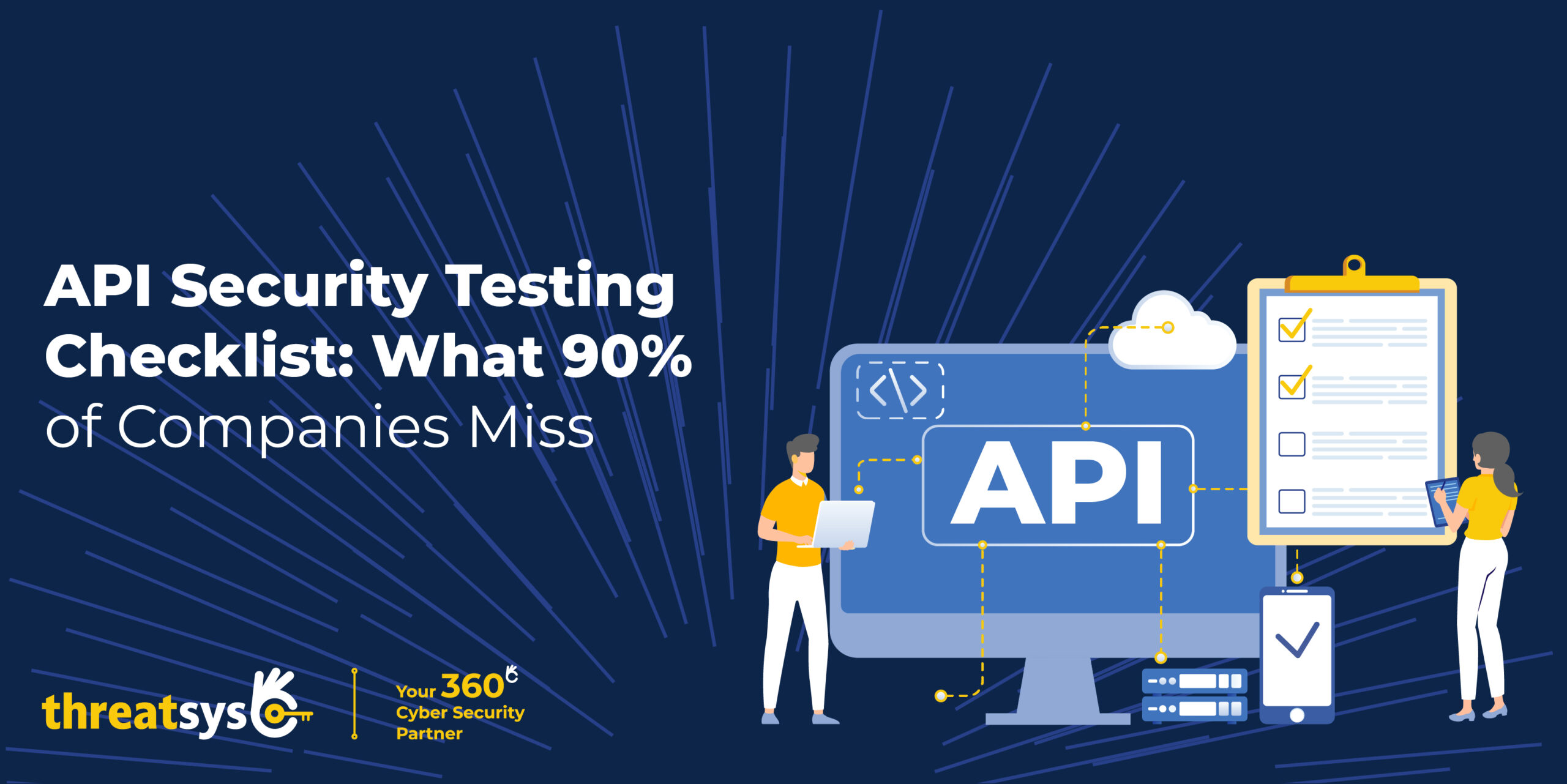

APIs are the backbone of modern digital applications. From mobile apps and SaaS platforms to cloud-native and AI-driven systems, APIs silently handle authentication, data exchange, and business logic. Yet despite their critical role, API security remains one of the most overlooked areas of cybersecurity.
Recent breach investigations show a recurring pattern. Organizations do test APIs,but they mostly test what is visible and familiar. The real risks hide deeper, in logic, authorization, and uncontrolled data exposure. This blog highlights the key API security testing gaps that most companies miss, even after conducting assessments.
Why API Security Testing Is Non-Negotiable
Traditional security tools were built for web applications, not APIs. APIs expose backend logic directly, exchange sensitive data at scale, and communicate autonomously without human oversight, significantly expanding the attack surface. Unlike web interfaces, APIs often lack visual cues, making malicious activity harder to detect.
Modern attackers don’t rely on noisy exploits. Instead, they take advantage of broken authorization, logic flaws, and excessive trust issues that blend into normal traffic and are rarely uncovered by standard security testing. This shift makes API-focused security testing essential, not optional.
API Security Testing Checklist (Beyond the Basics)
1. Authentication Works — Authorization Breaks
Most organizations confirm that users can authenticate successfully. Very few verify whether users can only access what they are permitted to. Authorization failures often allow attackers to access other users’ data, invoke privileged functions, or escalate roles simply by manipulating object IDs or request parameters. These flaws that are commonly known as Broken Object Level Authorization (BOLA) and Broken Function Level Authorization (BFLA) are now among the leading causes of API breaches.
Effective testing must validate access control at every object and function level, not just at login.
2. Business Logic Abuse Is Rarely Tested
APIs don’t usually fail because of outdated vulnerabilities. They fail because attackers understand how the business works. By replaying valid requests, skipping workflow steps, or abusing transaction sequences, attackers can cause financial loss, data manipulation, or service misuse without triggering security alerts. Because business logic is unique to every application, automated tools struggle to detect these issues.
This is why logic abuse remains one of the most overlooked areas in API security testing.
3. Excessive Data Exposure Goes Unnoticed
Many APIs return more data than the frontend actually needs. Developers rely on the client to ignore extra fields, but attackers don’t. Sensitive information such as personal data, internal identifiers, tokens, or debug fields often travels quietly inside API responses. These exposures are easy to miss during testing, yet they create serious compliance and privacy risks.
Security assessments must analyze response payloads, not just request validation.
4. Rate Limiting Exists — But Is It Tested?
Rate limiting is often enabled as a checkbox requirement, not as a tested control. Without validation, APIs remain vulnerable to brute-force attacks, scraping, and automation-based abuse. Effective testing should simulate high-frequency and concurrent request scenarios to verify whether abuse controls actually work under real-world conditions.
5. Deprecated APIs Are a Hidden Risk
As APIs evolve, older versions are frequently left active for backward compatibility. These legacy endpoints often use weaker authentication methods, outdated logic, or lack monitoring altogether. Attackers actively look for such forgotten APIs because they are rarely tested or maintained. API security testing must include version discovery and consistency checks across all active endpoints.
6. Input Validation Needs Context, Not Just Rules
Basic input validation checks are common, but insufficient. APIs are vulnerable to contextual abuse such as mass assignment, parameter tampering, and unexpected data injection through nested objects. These issues don’t break the API technically, but they break its intended behavior.
Testing should focus on how APIs handle unexpected yet valid-looking input, not just malformed data.
7. Logging and Monitoring Are Often Ignored
Security testing frequently ends once vulnerabilities are found. Detection readiness is rarely validated. Many organizations lack proper logging for sensitive API actions or alerts for abnormal usage patterns. When an attack occurs, there is little visibility into what happened or how to respond.
A mature API security checklist includes validation of logs, alerts, and incident response readiness.
How Threatsys Helps Secure APIs End-to-End

Threatsys approaches API security from an attacker’s perspective. Our assessments go beyond surface vulnerabilities to identify authorization gaps, business logic abuse, excessive data exposure, and monitoring blind spots.
We provide:
- Manual and automated API penetration testing
- Business logic and authorization flaw discovery
- OWASP API Top 10 aligned assessments
- Secure API design and testing guidance
- Continuous monitoring and compliance-ready reporting
Our experts help organizations identify what scanners miss and attackers exploit.
By combining manual expertise with automated testing, we help organizations secure APIs in a way that aligns with real-world attack patterns and compliance requirements.
Conclusion
APIs rarely fail because they are untested,they fail because the right risks go unnoticed. Gaps in authorization, business logic, and data exposure continue to be the most exploited weaknesses. Threatsys helps organizations uncover these hidden risks through attacker-centric API security testing that goes beyond surface checks,so APIs remain secure, resilient, and trusted as they scale.
Stay secure, stay aware with Threatsys.