
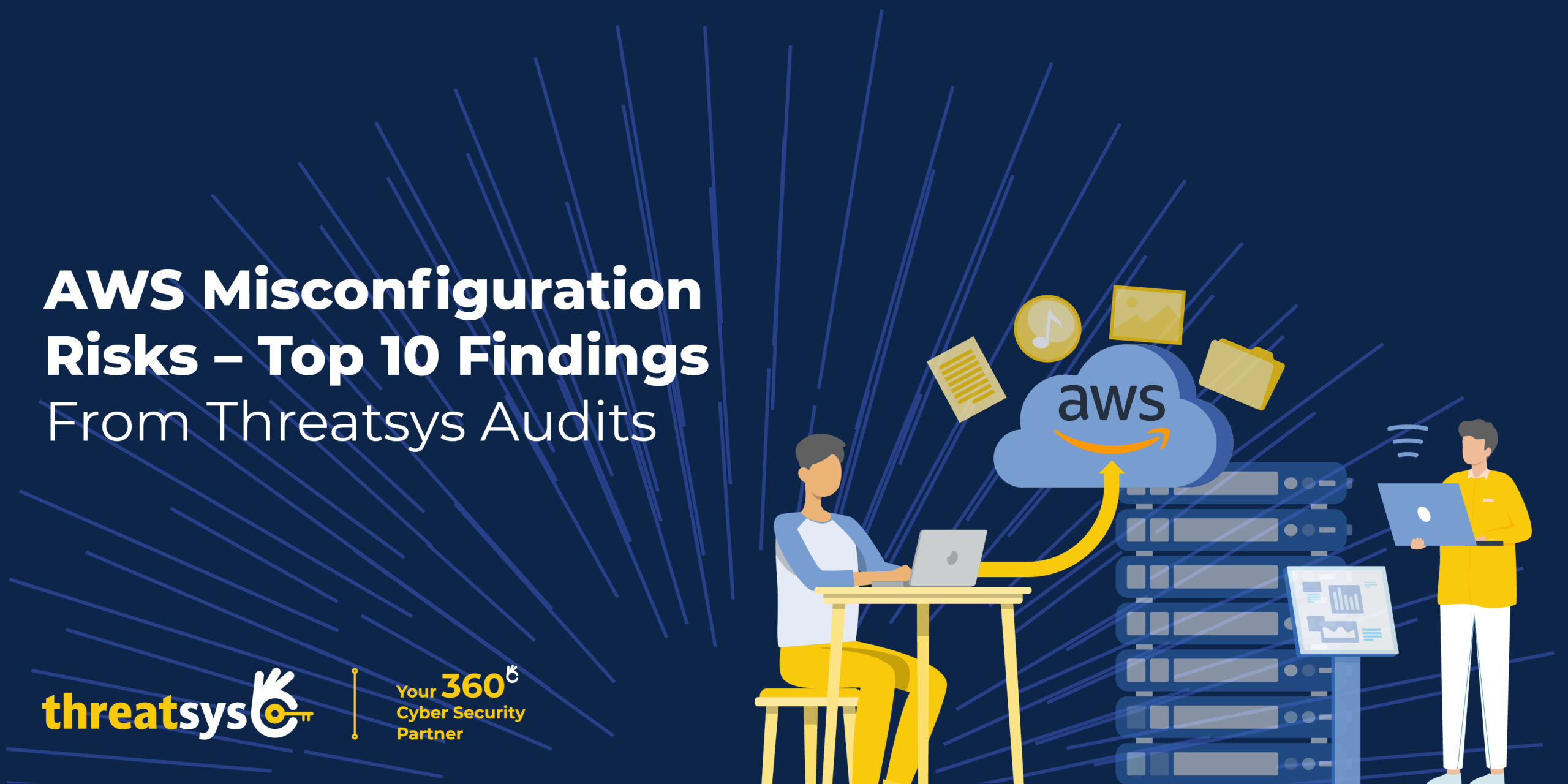

Cloud adoption has accelerated faster than cloud security maturity. Organizations move workloads to AWS for agility and scale, but in doing so, they often inherit a dangerous assumption that the cloud is secure by default.
Threatsys cloud security audits repeatedly reveal a consistent pattern. AWS environments are rarely compromised because of unknown vulnerabilities. They are compromised because of misconfigurations hiding in plain sight. Controls exist, but they are incomplete, overly permissive, or never validated against real-world attack scenarios.
This blog highlights the top AWS misconfiguration risks identified during Threatsys audits , issues that persist even in environments that believe they are secure.
Why AWS Misconfigurations Remain a Critical Risk
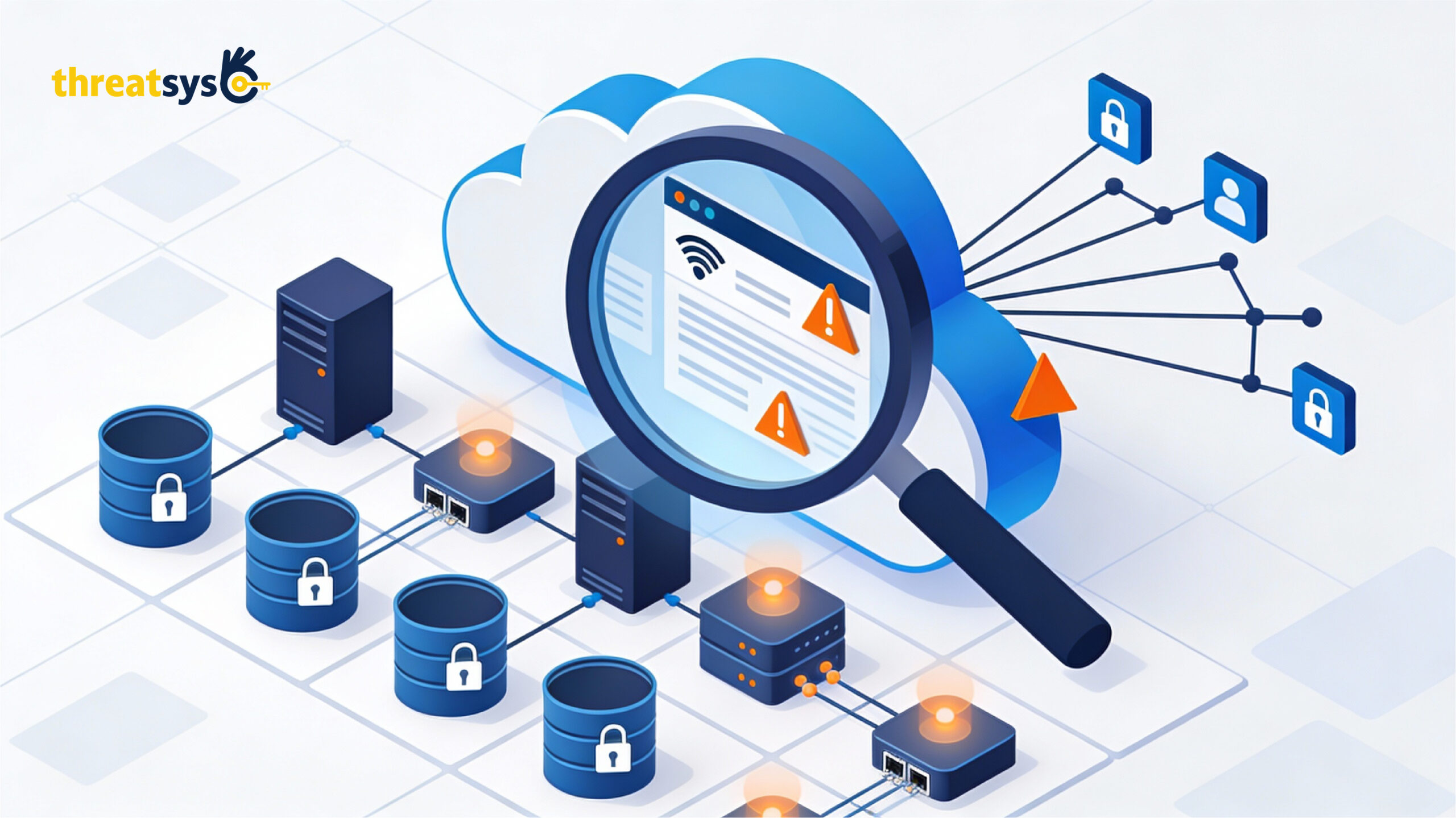
AWS follows a shared responsibility model. While AWS secures the underlying infrastructure, customers are responsible for configuring services securely. In practice, rapid deployments, evolving architectures, and operational pressure lead to security being configured once and rarely revisited.
Attackers don’t attempt to break AWS itself. They look for exposed storage, excessive permissions, open networks, and missing visibility weaknesses that allow them to blend into normal cloud activity rather than trigger alerts.
Misconfigurations turn strong cloud services into silent entry points.
Top 10 AWS Misconfiguration Findings (Beyond the Obvious)
1. Public Exposure Through Storage Misconfigurations
S3 remains one of the most powerful and most misconfigured AWS services.
Threatsys audits frequently uncover buckets exposed through permissive bucket policies, misused ACLs, or inherited access from IAM roles. Often, the exposure is unintentional and goes unnoticed because the application continues to function normally. What makes this risk severe is not just public access, but what is stored backups, logs, internal reports, and regulated data that were never meant to be internet-facing.
2. IAM Permissions That Far Exceed Business Needs
IAM is designed to enforce least privilege, yet most environments drift in the opposite direction.
We regularly observe:
- Broad wildcard permissions
- Shared roles across environments
- Privileged access granted for convenience and never revoked
These permissions may not cause immediate issues, but once an attacker gains a foothold, over-permissive IAM turns a minor breach into full environment compromise.
3. Security Groups That Function as Open Firewalls
Security groups are often treated as static network rules instead of dynamic security controls.
Open SSH, RDP, and database ports to the internet are common findings, especially in legacy or testing environments that were never hardened post-deployment. Even when authentication exists, exposed services increase attack surface and invite continuous probing. In cloud environments, network exposure is often the first visible signal attackers look for.
4. Logging Enabled, But Not Truly Effective
CloudTrail and CloudWatch are frequently enabled to meet compliance requirements, but rarely validated for effectiveness.
Threatsys audits reveal:
- Partial region coverage
- Insufficient log retention
- No alerting on high-risk activities
Without validated logging and monitoring, suspicious behavior blends into normal cloud operations, leaving security teams blind during and after an incident.
5. Encryption Controls Left Optional
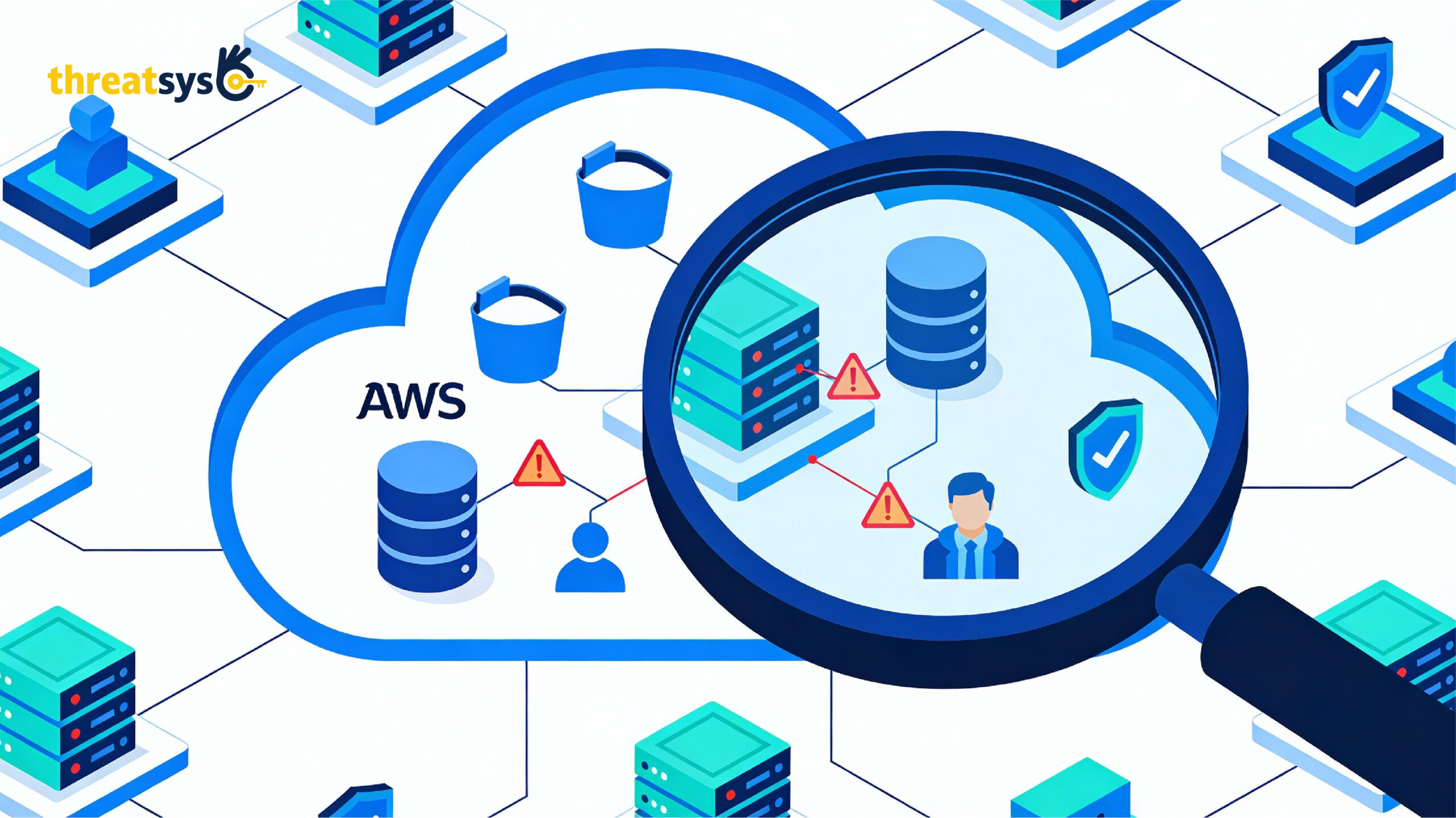
AWS provides native encryption for storage and databases, yet many resources remain unencrypted due to default settings or legacy deployments. Unencrypted EBS volumes, RDS instances, and S3 objects significantly increase impact during a breach or insider threat scenario. Encryption is often assumed rather than verified, creating a false sense of security.
6. Root and Privileged Accounts Without Strong Protection
One of the most critical findings is also one of the simplest.
Root accounts without MFA, privileged IAM users with console access, and shared administrative credentials are still common. These accounts represent single points of total failure in AWS environments. When compromised, attackers don’t need advanced techniques , they inherit complete control.
7. Internet-Facing Applications Without Layered Protection
Load balancers, API Gateways, and application endpoints often lack protective layers such as WAFs, strict TLS configurations, or abuse detection.
This leaves applications vulnerable to:
- Automated attacks
- API abuse
- Credential stuffing and reconnaissance
Misconfigurations at this layer expose business logic and backend services directly to the internet.
8. Insecure and Outdated Compute Resources
EC2 instances are often launched from outdated AMIs or maintained without proper patching cycles.
Threatsys audits frequently uncover:
- Unknown AMI origins
- Unpatched operating systems
- No vulnerability visibility
These weaknesses provide attackers with known exploit paths that bypass cloud-native security controls entirely.
9. Flat Network Architectures That Enable Lateral Movement
Many AWS environments lack proper segmentation.
Production and non-production workloads share the same VPC, sensitive services reside in public subnets, and NACLs are rarely enforced. Once an attacker gains initial access, lateral movement becomes trivial. Cloud networks should reduce blast radius, not expand it.
10. Compliance Gaps Hidden Behind Default Configurations
Default AWS configurations rarely meet regulatory requirements on their own.
Threatsys audits consistently identify gaps against CIS Benchmarks, ISO 27001, SOC 2, GDPR, and PCI DSS. Without continuous configuration validation, compliance becomes reactive and audit-driven rather than built into the environment.
How Threatsys Secures AWS Environments

Threatsys cloud security audits go beyond configuration checks. We assess AWS environments the way attackers do looking for silent exposure, privilege abuse, and monitoring blind spots.
Our approach includes:
- AWS CIS Benchmark and Well-Architected reviews
- IAM privilege analysis and access path discovery
- Misconfiguration and exposure validation
- Logging, monitoring, and detection readiness assessment
- Compliance-aligned reporting and remediation guidance
We help organizations uncover what automated tools often miss and attackers actively exploit.
Conclusion
AWS environments rarely fail because security controls are absent. They fail because misconfigurations go unchallenged and unchecked. Threatsys audits consistently show that small configuration gaps can lead to large security failures. Identifying and fixing these risks early is critical to keeping cloud environments resilient, compliant, and trusted as they scale.
Stay secure, stay aware with Threatsys.