
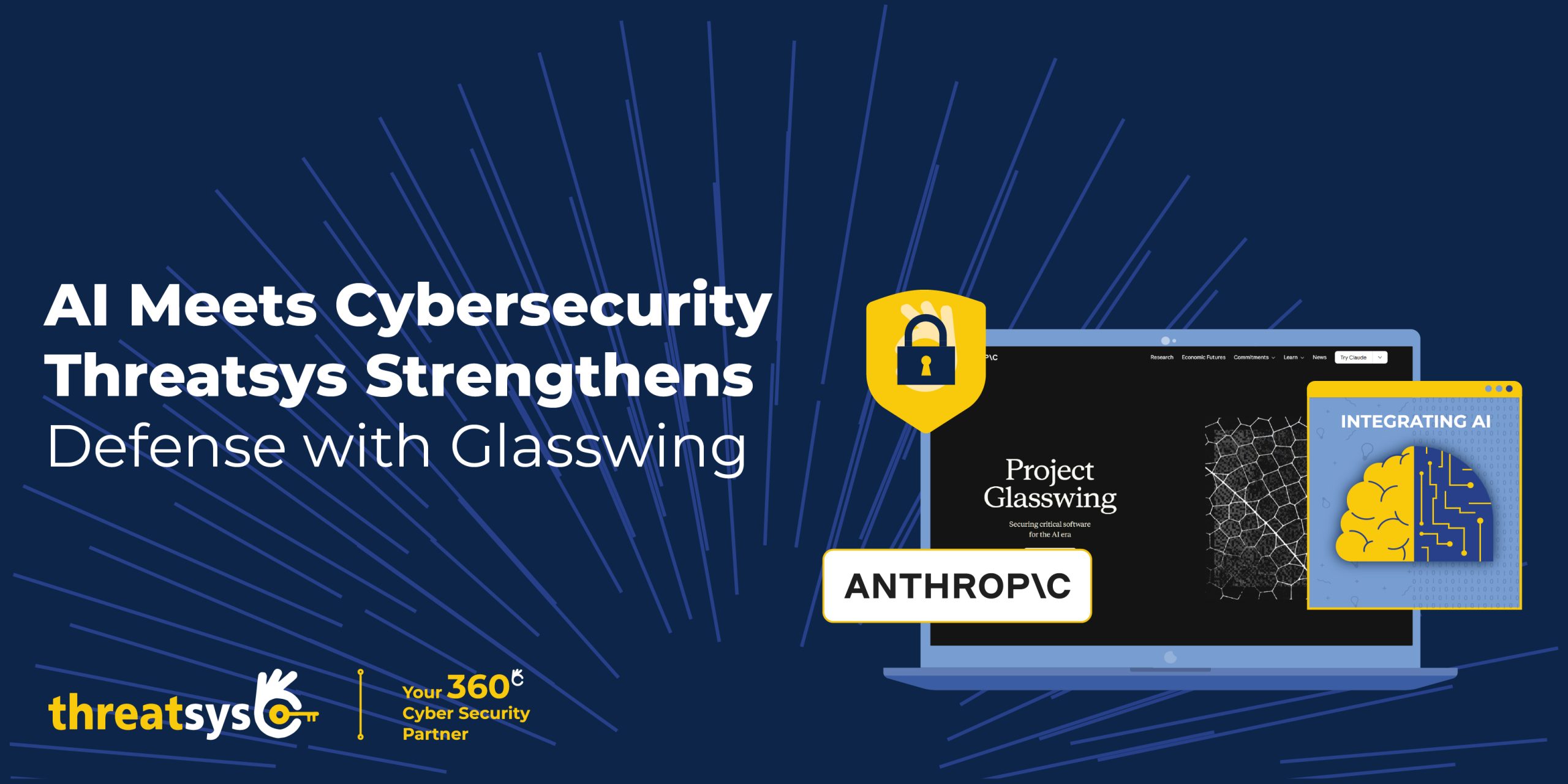

Project Glasswing Isn’t the Future – It’s a Warning: AI in Cybersecurity Is Already Here
While the world talks about Anthropic’s secretive Glasswing project, the real question is — are organizations ready for AI-powered cyber warfare today?
The Noise vs The Reality
The cybersecurity industry is buzzing with discussions around Project Glasswing –
an advanced AI initiative reportedly capable of identifying vulnerabilities at an unprecedented scale.
But here’s the truth no one is talking about:
Glasswing is not a product you can deploy.
It’s not available to enterprises.
And it’s not something your organization can “buy” today.
Instead, it is a signal – a glimpse into the future of cyber warfare where AI doesn’t just assist attackers or defenders… it becomes them.
The Rise of AI-Powered Cyber Defense
The evolution of AI—especially large language models has introduced a new era where machines can analyze, audit, and even break code with remarkable precision.
Anthropic’s Project Glasswing represents a major step forward. While not built solely for cybersecurity, its deep understanding of code enables advanced vulnerability detection and security analysis.
What sets it apart?
- Identifies vulnerabilities at near human-expert level
- Chains multiple low-risk issues into high-impact attack paths
- Operates across complex systems autonomously
- Speeds up analysis across large codebases
Early testing has already revealed vulnerabilities in major systems—including flaws that remained undetected for years.
What Exactly Is Project Glasswing?
Project Glasswing is a restricted, experimental cybersecurity initiative designed to explore how advanced AI models can:
Detect vulnerabilities across complex systems , simulate cyberattacks at scale ,strengthen defensive capabilities autonomously.
However:
- It is currently not publicly available
It is limited to controlled environments and select partners
It is being handled cautiously due to serious misuse risks - This alone should tell you something critical:
If the most advanced AI in cybersecurity is being restricted… the risk is real.
Cybersecurity is becoming predictive, not just reactive.
To address this, advanced AI systems like Glasswing are being deployed selectively,ensuring they strengthen defenses before becoming widely accessible.
How Threatsys is Preparing to Leverage AI Like Glasswing in Cybersecurity Workflows

The Threatsys Approach: From Noise to Action
Because, we don’t believe in “more scanning.”
We believe, we are not waiting for the “AI era” to arrive — we are already building within it. Inspired by the direction set by initiatives like Anthropic’s Glasswing and advanced models such as Claude, we are actively integrating AI into our cybersecurity workflows to enhance speed, intelligence, and decision-making.
From AI-assisted vulnerability analysis and automated triaging to contextual risk prioritization and smarter threat correlation, our focus is not just on finding more issues, but on making security outcomes faster and more actionable. As the landscape evolves with more powerful models and capabilities, Threatsys is continuously adapting — combining human expertise with AI-driven insights to ensure that our clients are prepared not just for today’s threats, but for the scale and complexity of what’s coming next.
1. Advanced Vulnerability Discovery
- AI helps identify hidden and complex vulnerabilities much faster than traditional methods, including those deeply embedded in code or architecture.
- It efficiently scans large-scale applications and infrastructure, reducing manual effort while improving accuracy.
- Even subtle, high-risk flaws that are often missed in regular testing can be detected early, preventing potential exploitation.
2. Intelligent Red Teaming
- AI enables simulation of real-world attack scenarios, giving a more practical view of how systems can be breached.
- It chains multiple low-risk vulnerabilities into realistic attack paths, revealing the true impact of combined weaknesses.
- Systems are tested beyond surface-level defenses, helping organizations understand and strengthen their actual security posture.
3. Accelerated Secure Development Lifecycle
- Developers receive real-time security insights during coding, allowing immediate identification and resolution of vulnerabilities.
- Issues are fixed early in the development phase, reducing both cost and future security risks.
- Security becomes an integrated part of development, ensuring faster delivery without compromising protection.
4. Continuous Security Testing
- AI enables continuous code and system scanning instead of relying on periodic assessments.
- Real-time monitoring helps detect unusual activity and emerging threats as they occur.
- Faster detection leads to quicker remediation, minimizing potential damage and downtime.
5. Strengthening Open Source & Infrastructure Security
- Widely-used open-source libraries and frameworks are continuously scanned for vulnerabilities.
- Risks are identified early before they can impact large-scale systems or multiple users.
- Infrastructure-level weaknesses are detected and secured, ensuring overall system resilience.
Real Impact: From Detection to Prevention
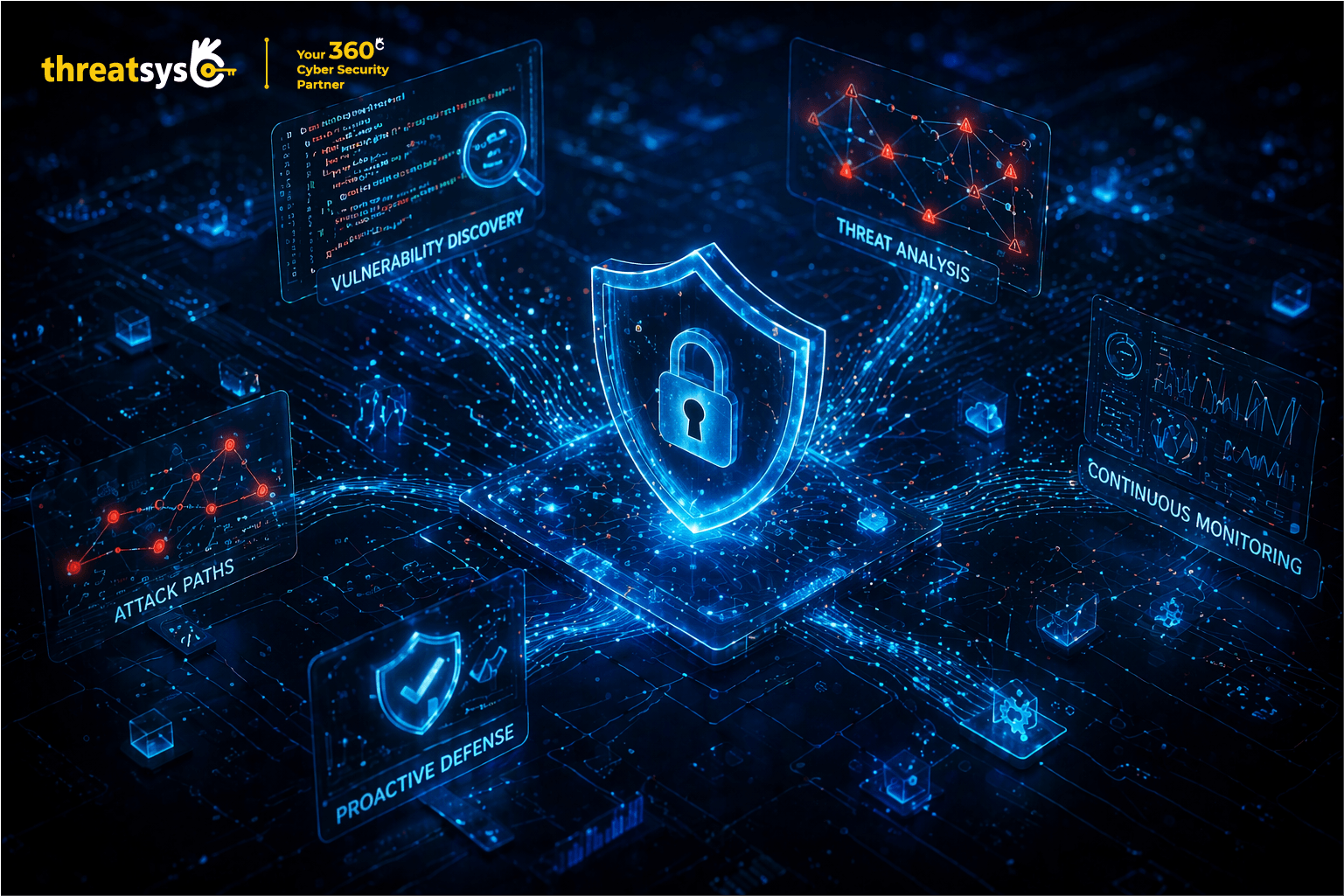
AI-driven cybersecurity is fundamentally transforming how organizations approach security shifting from reactive defense to proactive resilience.
- Reactive → Proactive: Threats are anticipated and neutralized before they cause damage
- Manual → Autonomous: AI reduces human dependency by automating complex security tasks
- Slow → Real-time: Detection and response happen instantly, minimizing risk exposure
With Threatsys, organizations benefit from:
- Faster and more accurate threat detection
- Reduced exposure to zero-day vulnerabilities
- Stronger, more resilient digital infrastructure built for scale
The Future of Cybersecurity is Collaborative
Cybersecurity is no longer a siloed function,it’s a shared responsibility across an increasingly interconnected digital ecosystem. As software continues to power global industries, collaboration becomes critical to staying secure.
Threatsys embraces this future by:
- Adopting advanced AI technologies with a responsible and strategic approach
- Staying aligned with global cybersecurity advancements and emerging threat landscapes
- Continuously evolving defense strategies to meet modern security challenges
Conclusion
Artificial intelligence is not just enhancing cybersecurity,it is redefining its very foundation. Innovations like Glasswing mark a shift toward a future where security is intelligent, adaptive, and continuous.
By integrating AI-driven defense mechanisms into its core operations, Threatsys ensures that organizations are not only protected against today’s threats but are fully prepared for what lies ahead.
Because in a world driven by software,
security is not optional it is foundational.

Stay secure,
Stay aware with Threatsys.