

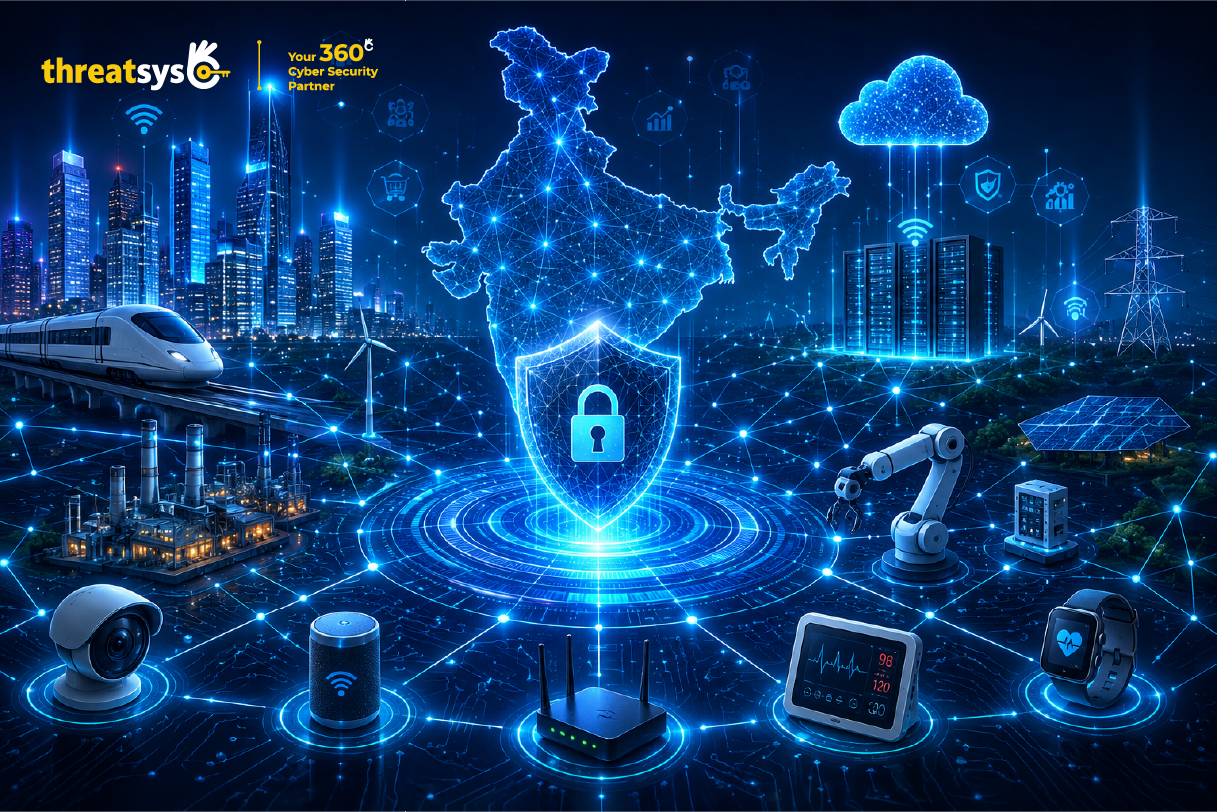
India is rapidly becoming one of the world’s largest connected economies. From smart cities and industrial automation to connected healthcare devices and intelligent transportation systems, the Internet of Things (IoT) is transforming how businesses and governments operate. But as IoT adoption accelerates, so do the cybersecurity risks associated with it.
In 2026, organizations are no longer dealing with isolated devices — they are managing massive interconnected ecosystems where a single vulnerable endpoint can compromise entire networks. Attackers are increasingly targeting IoT environments through insecure APIs, weak authentication, outdated firmware, and poorly configured devices.
This has made IoT security a critical priority for enterprises, infrastructure providers, and government sectors across India.
Below are the 5 key IoT security priorities organizations must focus on in 2026 to build secure, resilient, and future-ready connected ecosystems.
1. Strengthen Device Authentication & Access Control
One of the biggest weaknesses in IoT environments is poor authentication. Many connected devices still operate with default credentials, weak passwords, or inconsistent access controls, making them easy targets for attackers.
In 2026, organizations must move toward a zero-trust approach where every device, user, and connection is continuously verified before access is granted.
Key focus areas include:
- Implementing strong password policies and multi-factor authentication (MFA)
- Enforcing role-based and least-privilege access controls
- Eliminating default credentials across IoT deployments
Strong identity and access management significantly reduces the attack surface and prevents unauthorized device manipulation.
2. Secure IoT Data Across Devices, Networks & Cloud
IoT ecosystems generate and transmit massive volumes of sensitive data in real time. Without proper protection, this data can be intercepted, altered, or exposed.
Organizations must ensure security across the entire IoT data lifecycle — from collection and transmission to storage and processing.
This requires:
- End-to-end encryption for data in transit and at rest
- Secure communication protocols such as TLS and HTTPS
- Segmentation of IoT networks from critical business infrastructure
Data security is especially important in sectors like healthcare, manufacturing, smart infrastructure, and fintech, where compromised information can lead to operational disruption and regulatory consequences.
3. Address Firmware & Patch Management Risks
Outdated firmware remains one of the most exploited weaknesses in IoT security . Many organizations deploy connected devices but fail to maintain regular updates, leaving systems exposed to known vulnerabilities.
In 2026, proactive patch management is essential for maintaining resilience against evolving threats.
Organizations should focus on:
- Regular firmware updates and vulnerability patching
- Secure over-the-air (OTA) update mechanisms
- Continuous monitoring for outdated or unsupported devices
Without proper patch management, even advanced IoT infrastructures can become easy entry points for attackers.
4. Build Runtime Monitoring & Threat Detection Capabilities
Traditional security approaches are often insufficient for modern IoT security because attacks increasingly happen in real time. Organizations need continuous visibility into device behavior, network activity, and anomalous events.
Modern IoT security strategies must include:
- Real-time monitoring of connected devices and traffic
- AI-driven anomaly detection for suspicious behavior
- Automated alerts and incident response mechanisms
Runtime visibility helps organizations detect compromised devices before they can impact critical operations or spread across networks.
As IoT environments grow larger and more complex, continuous monitoring becomes essential rather than optional.
5. Align IoT Security with Compliance & Governance
India’s growing focus on cybersecurity and data protection is pushing organizations toward stronger governance frameworks for connected systems.
With increasing regulatory attention around critical infrastructure, data privacy, and digital ecosystems, organizations must ensure that IoT security aligns with broader compliance requirements.
This includes:
- Defining clear IoT security policies and governance structures
- Conducting regular security assessments and risk audits
- Maintaining visibility into third-party and supply chain risks
Organizations that integrate governance into their IoT strategy will be better positioned to handle both operational and regulatory challenges in the future.
How Threatsys Technologies Secures IoT Ecosystems

As IoT adoption grows, organizations need more than traditional cybersecurity solutions — they need a strategy built specifically for connected environments.
Threatsys helps organizations secure IoT ecosystems through a structured, end-to-end security approach:
- IoT Security Assessment & Risk Analysis – Identifying vulnerabilities across connected devices, networks, APIs, and cloud integrations to reduce exposure and strengthen resilience.
- Device & Network Security Implementation – Securing IoT communication channels, access controls, and device authentication mechanisms to prevent unauthorized access.
- Firmware & Vulnerability Management – Monitoring device health, managing firmware updates, and addressing known vulnerabilities before attackers can exploit them.
- Continuous Monitoring & Threat Detection – Providing real-time visibility into IoT environments with proactive threat detection and incident response support.
- Compliance & Governance Support – Helping organizations align IoT ecosystems with evolving cybersecurity, privacy, and regulatory requirements.
This enables businesses to deploy connected technologies securely while maintaining operational continuity and trust.
Conclusion
IoT is redefining India’s digital future, powering smarter industries, connected infrastructure, and intelligent services across every sector. However, as connected ecosystems expand, so does the cyber risk surrounding them. In 2026, IoT security is no longer just about protecting devices , it is about securing entire digital ecosystems against sophisticated, large-scale, and real-time attacks. Organizations that prioritize IoT security today will not only reduce operational risks but also strengthen customer trust, compliance readiness, and long-term resilience.
Because in a hyperconnected world, every device matters — and every vulnerability counts.

Stay secure, stay aware with Threatsys.