icon
Have any questions?
Call: 09668200222
HIPAA Cybersecurity Requirements 2026 | Threatsys
Cyber Security Compliance

HIPAA Cybersecurity Requirements 2026: Essential Security Controls for Healthcare Startups

Healthcare startups are revolutionizing the medical ecosystem from AI-driven diagnostics to telemedicine platforms and digital health applications. But as patient data becomes increasingly digitized, cyber threats are evolving just as fast. In 2023, the healthcare industry suffered an average data breach cost of $10.93 million, the highest of any sector for the 13th consecutive year, according to IBM’s Cost of a Data Breach Report.

Why HIPAA Cybersecurity Compliance Matters in 2026

Protecting electronic Protected Health Information (ePHI) is no longer just a regulatory obligation; it is a fundamental responsibility to patients who trust your platform with their most sensitive data. With the HHS Office for Civil Rights finalizing sweeping Security Rule updates, 2026 marks a critical inflection point. Startups that fail to act risk penalties of up to $1.9 million per violation category and irreparable reputational damage.

Below are the five essential HIPAA cybersecurity requirements your startup must implement to stay compliant, resilient, and trusted in 2026.
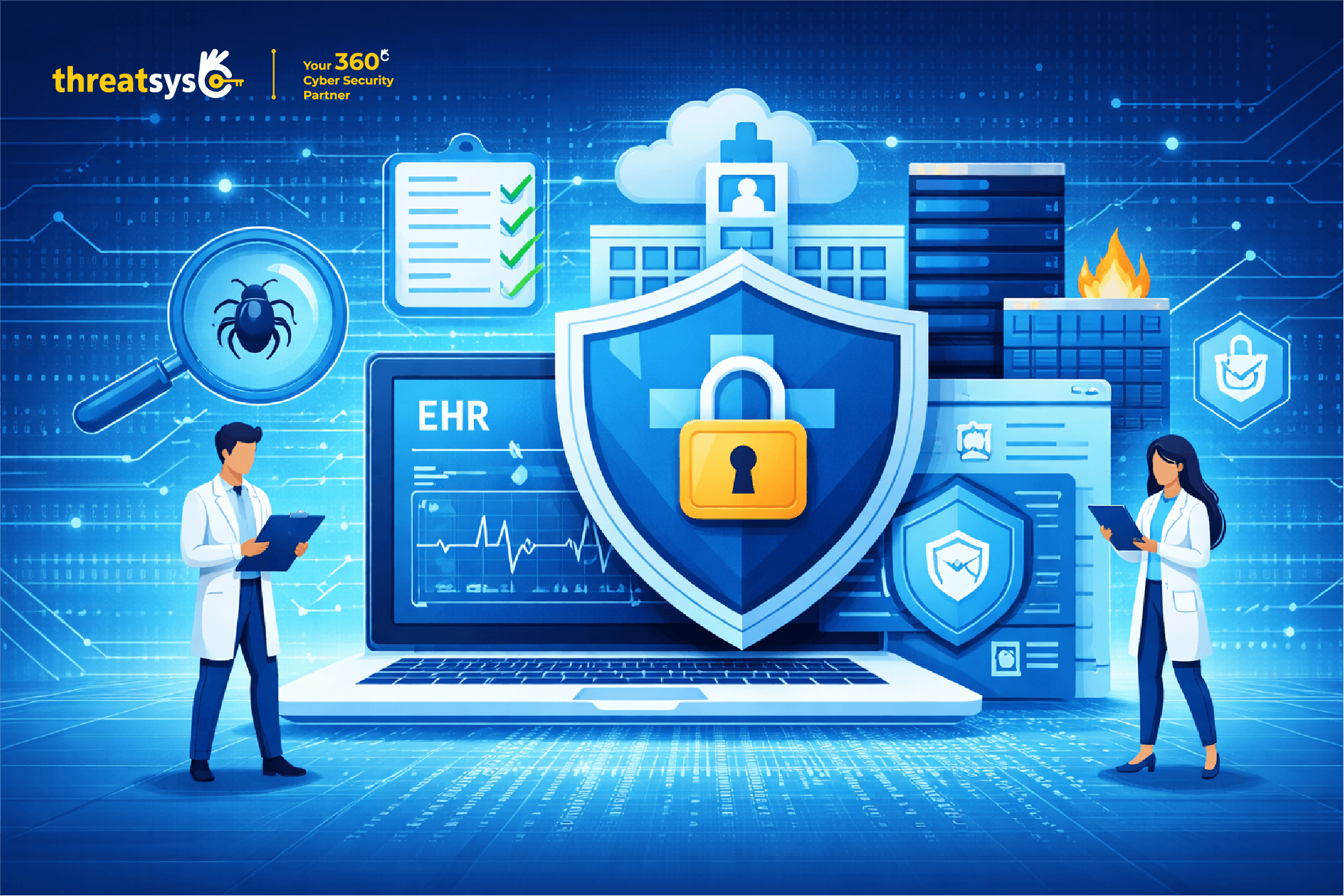
  1.  Conduct Rigorous Risk Assessments & Implement Continuous Compliance Monitoring

A single annual audit is no longer enough. By 2026, HIPAA compliance demands a proactive, continuous approach to risk management. Startups must conduct thorough assessments that identify vulnerabilities across cloud infrastructure, third-party APIs, mobile applications, and internal networks  mapping exactly how ePHI flows through every system.

According to the Ponemon Institute, organizations with continuous compliance monitoring detect breaches 74 days faster than those relying on periodic audits. Startups that embrace this shift gain the ability to detect threats before they escalate into costly, reportable breaches.

HIPAA Cybersecurity Requirements 2026 | Threatsys

  1. Implement Strong Encryption & Secure Data Storage Across Every Layer

Every piece of patient data whether stored in the cloud, transmitted through a telehealth platform, or cached on a mobile device must be protected with robust encryption. HIPAA’s updated Security Rule effectively mandates AES-256 encryption for data at rest and TLS 1.2 or higher for data in transit.

A critical mistake many startups make is assuming default cloud provider settings automatically satisfy HIPAA requirements  they do not. Every encryption control must be explicitly configured, verified, and documented. Strong encryption transforms a catastrophic breach into a manageable, potentially non-reportable incident.

  1. Strengthen Identity Security & Enforce Strict Access Controls

Compromised credentials are responsible for over 61% of breaches globally, according to Verizon’s 2024 Data Breach Investigations Report. Multi-factor authentication (MFA) must be enforced across every system touching ePHI, while role-based access control (RBAC) must ensure users access only the minimum data necessary for their role.

Startups must also actively monitor authentication activity for anomalies, unusual access hours, failed logins, or unrecognized locations  and configure automated alerts for immediate investigation. Disciplined identity management is one of the highest-return security investments a healthcare startup can make.

  1. Deploy Continuous Security Monitoring & Advanced Threat Detection

Modern cyber threats like ransomware and advanced persistent threats are engineered to evade detection for months. IBM research reveals the average healthcare breach takes 291 days to identify and contain every undetected day increases patient harm and breach costs significantly.

Healthcare startups must implement SIEM systems or equivalent solutions that aggregate logs, detect behavioral anomalies, and generate real-time alerts. Effective threat detection also requires defined escalation processes and documented response playbooks so monitoring capabilities translate into swift, decisive action.

  1. Build a Battle-Tested Incident Response & Breach Management Plan

Even the most secure startups must prepare for the possibility of a breach. HIPAA mandates breach notifications to affected individuals and HHS within 60 days of discovery. Attempting to build your response plan after an incident is far too late every hour of delay compounds legal exposure and reputational damage.

A robust incident response plan must define roles, establish communication protocols, document forensic procedures, and include pre-approved patient notification templates. Test the plan through tabletop simulation exercises at least annually so your team can execute confidently under pressure.

How Threatsys Technologies Helps Healthcare Startups Stay HIPAA Compliant

HIPAA Cybersecurity Requirements 2026 | Threatsys

Healthcare startups face a uniquely challenging balance: moving fast to innovate while meeting the stringent security standards that patient data demands. We deliver practical, startup-friendly cybersecurity solutions that turn HIPAA requirements into a competitive advantage rather than a compliance burden.

  • HIPAA Risk Assessment & Compliance Gap Analysis – Identifying vulnerabilities in infrastructure and applications, with prioritized, actionable recommendations mapped directly to HIPAA Security Rule requirements.
  • Penetration Testing for Healthcare Systems – Simulating sophisticated real-world attacks on telemedicine platforms, APIs, and cloud services to uncover exploitable weaknesses before malicious actors do.
  • Cloud Security & Data Protection – Designing secure cloud environments with robust encryption configurations, fine-grained access policies, and HIPAA-compliant data storage across AWS, Azure, and Google Cloud.
  • Threat Detection & Continuous Monitoring – Deploying real-time monitoring solutions that provide 24/7 visibility, detect anomalous behavior, and respond swiftly before threats escalate into reportable breaches.
  • Compliance Documentation & Audit Support – Preparing comprehensive regulatory documentation, security policies, and audit evidence packages that demonstrate your compliance posture with confidence.

Threatsys empowers healthcare startups to innovate without compromise — building digital health platforms that are secure, compliant, and trusted by the patients and providers who depend on them.

Conclusion

HIPAA cybersecurity in 2026 demands a genuine commitment to continuous monitoring, strong encryption, disciplined identity security, and tested incident preparedness. Healthcare startups that proactively implement these requirements will not only satisfy regulators  they will build the patient trust and operational resilience that defines enduring digital health businesses.

The cost of inaction is simply too high. With Threatsys as your cybersecurity partner, your startup gains the expertise and tools needed to turn HIPAA compliance into a powerful foundation for long-term growth.
Contact US Threatsys

Stay secure, stay aware with Threatsys.
 

Leave a Reply

Your email address will not be published. Required fields are marked *