
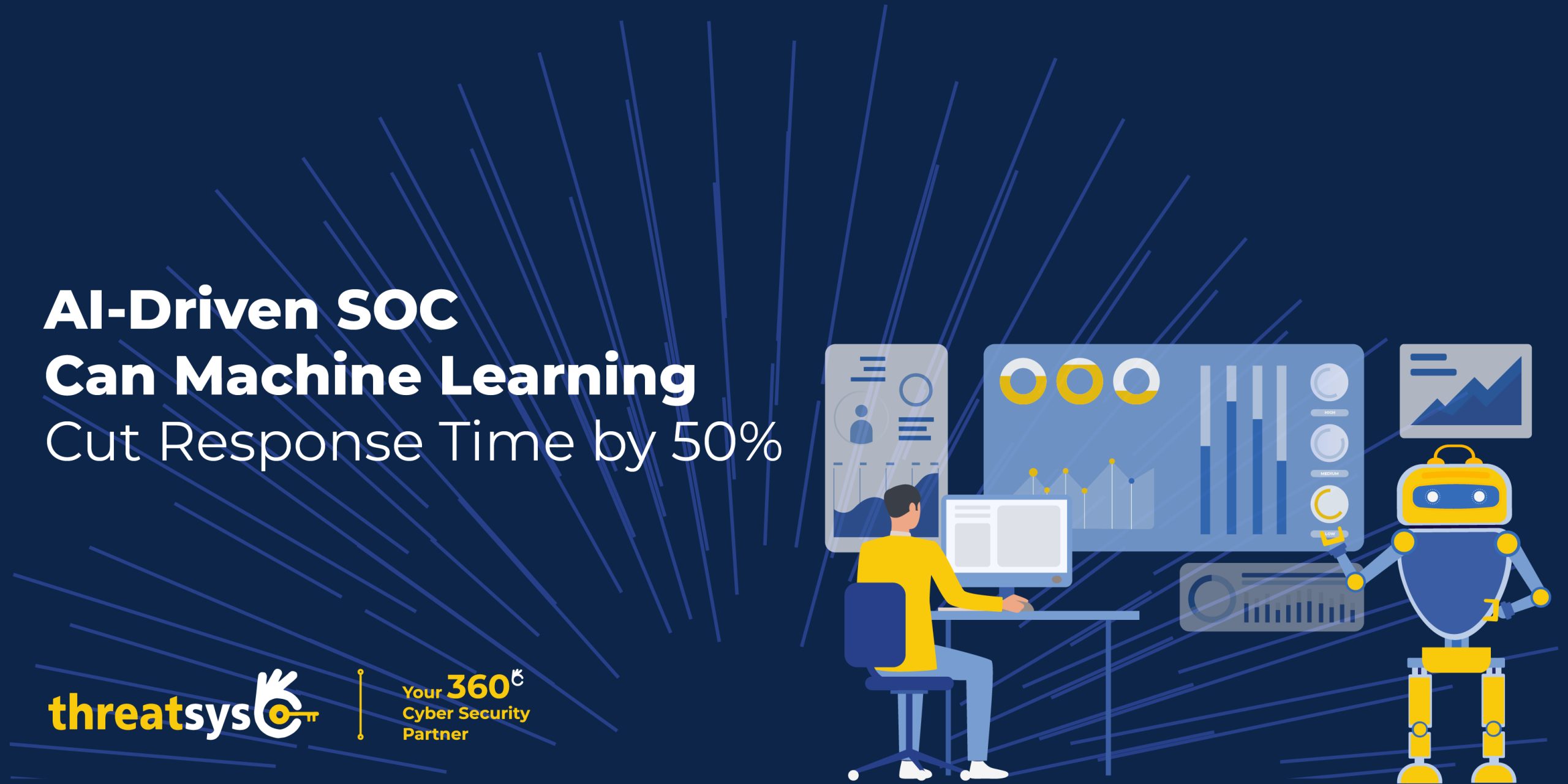

As cyber threats grow in scale and sophistication, Security Operations Centers (SOCs) are under increasing pressure to detect and respond to incidents faster than ever before. Traditional SOC models, heavily dependent on manual processes, are struggling to keep pace with the volume and complexity of modern attacks.
This has led organizations to explore AI-driven SOCs powered by Machine Learning (ML). The key question remains: can these technologies realistically reduce incident response time by 50%?
To understand this, it is important to examine the key areas where AI-driven SOCs create measurable impact.
The Limitations of Traditional SOCs
Conventional SOCs rely on predefined rules and manual analysis to detect threats. While effective to an extent, this approach presents several challenges. Security teams are often overwhelmed by a high volume of alerts, many of which turn out to be false positives. As a result, analysts spend a significant amount of time on triage rather than actual threat mitigation.
Moreover, sophisticated attacks that do not match known signatures can easily bypass traditional detection mechanisms, increasing the risk of delayed response.
The Role of AI and Machine Learning in SOC
AI-driven SOCs introduce intelligence and automation into security operations. Instead of relying solely on static rules, Machine Learning models continuously analyze data, identify patterns, and adapt to new threat behaviors.
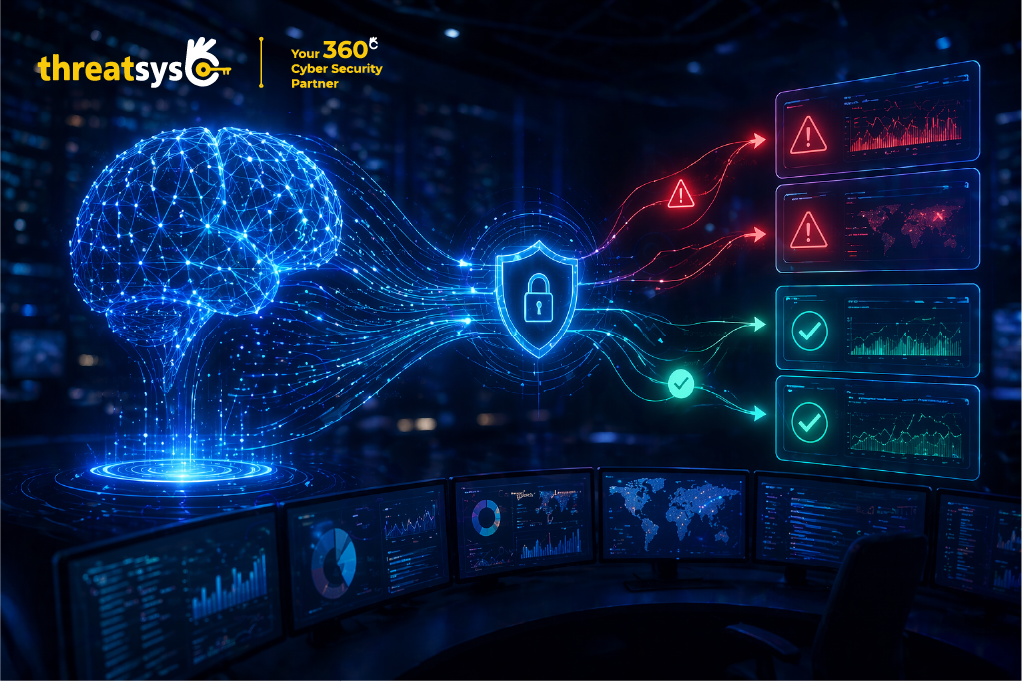
One of the most significant advantages is the ability to prioritize alerts. By analyzing historical data and contextual signals, ML models can distinguish between benign activities and genuine threats. This reduces noise and allows analysts to focus on high-risk incidents.
In addition, AI enhances threat detection by identifying anomalies in real time. It establishes a baseline of normal behavior and flags deviations, enabling faster identification of potential compromises.
Another critical capability is automated triage. AI systems can correlate data across multiple sources, enrich alerts with threat intelligence, and present actionable insights. This significantly reduces the time required to investigate incidents.
Impact on Incident Response Time
Organizations that have implemented AI-driven SOC capabilities have reported measurable improvements in both detection and response metrics. By automating repetitive tasks and improving accuracy, Machine Learning can significantly reduce the time between detection and remediation.
While the exact impact varies, achieving a reduction of up to 50% in incident response time is possible under the right conditions. Faster detection, improved prioritization, and automated workflows collectively contribute to this outcome.
Key Factors for Achieving Measurable Results
The effectiveness of an AI-driven SOC depends on a few critical factors that directly impact performance and outcomes:
- High-Quality Data
Machine Learning models rely on accurate and well-structured data. Poor data quality can lead to incorrect analysis, false positives, and missed threats. - Seamless Integration with Security Tools
AI must work in sync with existing systems such as SIEM, EDR, and SOAR. A well-integrated environment enables better automation and faster response. - Skilled Human Expertise
AI supports decision-making but does not replace analysts. Experienced professionals are essential to interpret insights and handle complex threats. - Continuous Monitoring and Model Tuning
Regular validation and updates of ML models are necessary to keep up with evolving attack patterns and maintain accuracy.
How Threatsys Enables Faster and Smarter AI-Driven SOC Operations

At Threatsys, we help organizations design and optimize AI-driven SOC environments that deliver measurable improvements in threat detection and incident response. Our approach combines advanced technology with operational expertise to ensure security teams can respond faster and more effectively.
- AI-Driven SOC Implementation
We design and deploy intelligent SOC frameworks tailored to your infrastructure, ensuring scalability, visibility, and efficiency from day one. - Advanced Threat Detection & Analytics
By integrating Machine Learning models, we enhance anomaly detection, reduce false positives, and enable more accurate threat identification. - SIEM & SOAR Optimization
We seamlessly integrate and fine-tune your existing security stack to enable automated workflows and faster incident response. - Accelerated Incident Response
Our approach streamlines detection-to-response cycles, significantly reducing Mean Time to Respond (MTTR). - Continuous Monitoring & Model Enhancement
We continuously monitor and refine AI models to keep pace with evolving cyber threats and changing attack patterns. - Expert-Led SOC Operations
Our cybersecurity experts ensure that AI-driven insights are translated into timely and effective action, strengthening your overall security posture.
Conclusion
AI-driven SOCs are transforming cybersecurity by combining automation with intelligence to enable faster and more accurate incident response. While a 50% reduction in response time is achievable, it depends on the right mix of Machine Learning, quality data, skilled analysts, and a well-integrated security ecosystem.
With Threatsys, organizations can effectively implement and optimize AI-driven SOC capabilities—ensuring faster detection, reduced response time, and stronger overall security posture through expert-led strategy, advanced analytics, and continuous monitoring.

Stay secure,
Stay aware with Threatsys.