
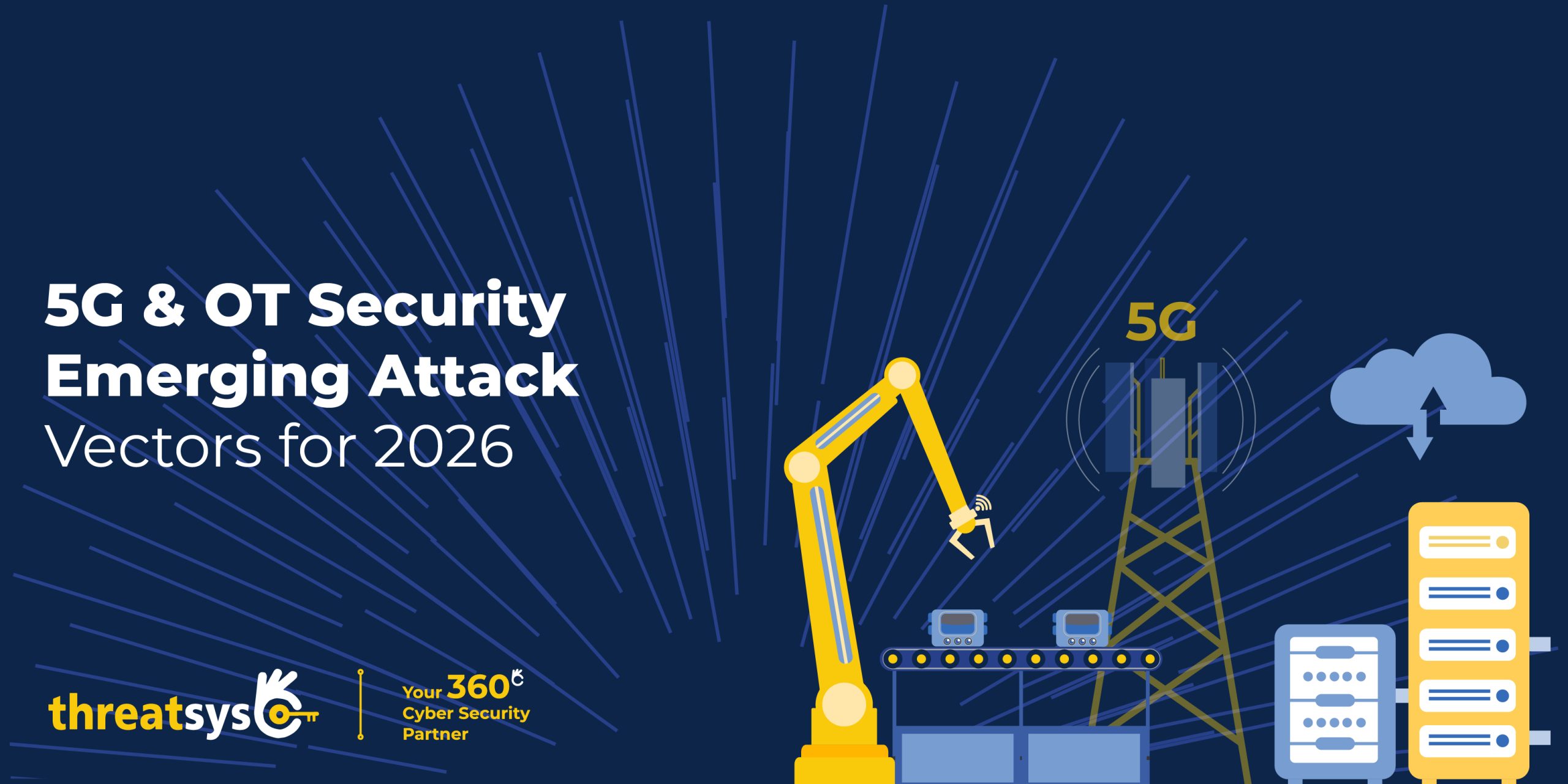

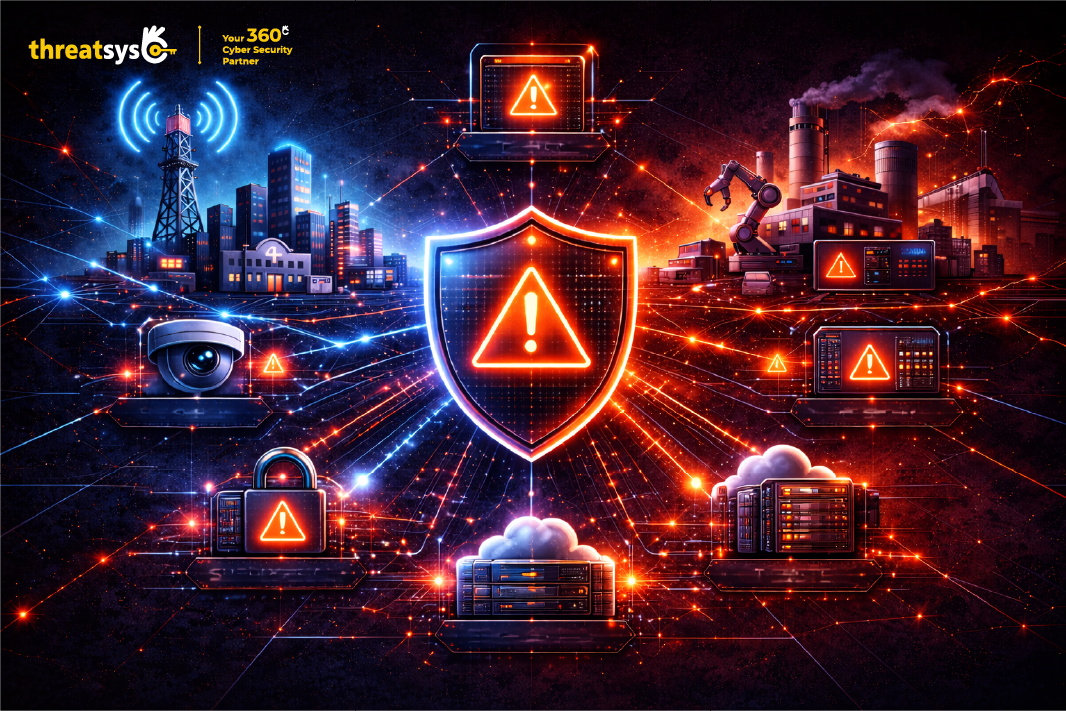
India is rapidly moving towards a hyper-connected ecosystem with the rollout of 5G and the growing adoption of Operational Technology (OT) across industries. From smart cities and healthcare to manufacturing and telecom, this shift is transforming how systems operate and communicate.
However, this rapid digital expansion is also introducing new cybersecurity challenges. Unlike traditional IT environments, 5G and OT systems are deeply interconnected, complex, and often not designed with strong security controls. This makes them highly attractive targets for modern cyber attackers.
By 2026, organizations will not just face more attacks—but smarter, faster, and more targeted ones. Below are the key emerging attack vectors that businesses must be prepared for:
1. 5G Network Slicing – Efficiency with Hidden Risks
5G introduces network slicing, where multiple virtual networks run on the same physical infrastructure. While this improves performance and flexibility, it also creates new security concerns.
If not properly configured, these slices can expose sensitive data or allow attackers to move between them. A single weakness in isolation controls can lead to unauthorized access to critical services, making it essential for organizations to validate how securely these slices are separated.
2. IoT Expansion – More Devices, More Entry Points
With 5G enabling faster connectivity, the number of IoT devices is growing rapidly across industries. While this improves automation and efficiency, it also significantly expands the attack surface.
Many of these devices operate with weak authentication, outdated firmware, or minimal security controls. Attackers can exploit these gaps to compromise devices and use them as entry points into larger networks, making IoT security a critical concern.
3. OT Systems – From Isolated to Exposed
Operational Technology systems, such as industrial control systems and SCADA, were traditionally isolated from external networks. However, modern requirements have connected them with IT systems for better efficiency and monitoring.
This convergence has made OT environments more exposed than ever. Attackers can now target critical infrastructure like power grids or manufacturing plants, potentially causing operational disruptions and even physical damage—not just data breaches.
4. Supply Chain Attacks – The Weakest Link Problem
5G and OT ecosystems rely heavily on third-party vendors, hardware providers, and software integrations. While this improves scalability, it also introduces supply chain risks.
Attackers may compromise firmware updates, exploit vendor access, or insert malicious components into systems. Since these threats often come from trusted sources, they are harder to detect and can remain hidden for long periods.
5. Edge Computing – Distributed but Difficult to Secure
5G enables edge computing, where data is processed closer to the source instead of centralized data centers. This improves speed and reduces latency—but also creates security challenges.
With multiple distributed nodes, organizations face limited visibility and increased risk of both remote and physical attacks. Securing these edge environments requires a completely different approach compared to traditional centralized systems.
6. Identity & Access Risks in OT Environments
Unlike IT systems, many OT environments still lack strong identity and access management controls. Shared credentials, lack of multi-factor authentication, and excessive privileges are common issues.
Attackers can exploit these weaknesses to gain unauthorized access and escalate privileges within the system. In critical environments, even a small access control gap can lead to major consequences.
7. Ransomware Targeting Critical Infrastructure
Ransomware attacks are no longer limited to IT systems—they are now targeting telecom networks and OT environments. These attacks are designed to cause maximum disruption and pressure organizations into paying high ransoms.
By encrypting data and halting operations simultaneously, attackers can impact entire industries. In sectors like manufacturing or energy, even a short disruption can lead to significant financial and operational losses.
8. IT, 5G & OT Convergence – A Complex Risk Landscape
The integration of IT, 5G, and OT systems is creating a highly interconnected ecosystem. While this improves efficiency, it also increases risk.
A vulnerability in one layer can quickly spread across multiple environments. Attackers can move seamlessly between systems, making it harder to detect and contain threats. This interconnected nature amplifies the impact of even a single security gap.
How Threatsys Technologies Helps Secure 5G & OT Environments

As these attack vectors evolve, organizations need advanced and specialized cybersecurity strategies. Threatsys helps businesses secure their next-generation infrastructure through:
- Advanced Red Teaming for 5G & OT – Simulating real-world attack scenarios across telecom, IoT, and industrial environments
- OT & ICS Security Assessments – Identifying vulnerabilities in critical infrastructure systems
- IoT & Edge Security Testing – Evaluating risks across connected devices and distributed nodes
- Cloud, API & Network Security Testing – Securing interconnected and hybrid ecosystems
- Threat Intelligence-Led Simulations – Replicating modern attacker behavior using real-world data
- Continuous Monitoring & Purple Teaming – Enhancing detection, response, and overall security posture.
Conclusion
The rise of 5G and OT is transforming India’s digital and industrial ecosystem—but it also brings a new wave of cybersecurity challenges. By 2026, attackers will focus on exploiting interconnected systems, targeting gaps across networks, devices, and infrastructure. Organizations that rely on outdated security approaches will struggle to keep up.
To stay ahead, businesses must adopt proactive, intelligence-driven security strategies that simulate real-world threats and continuously validate their defenses. With Threatsys , organizations can build a resilient and future-ready security framework ensuring their systems remain protected in an increasingly connected world.
Stay secure,
Stay aware with Threatsys.