
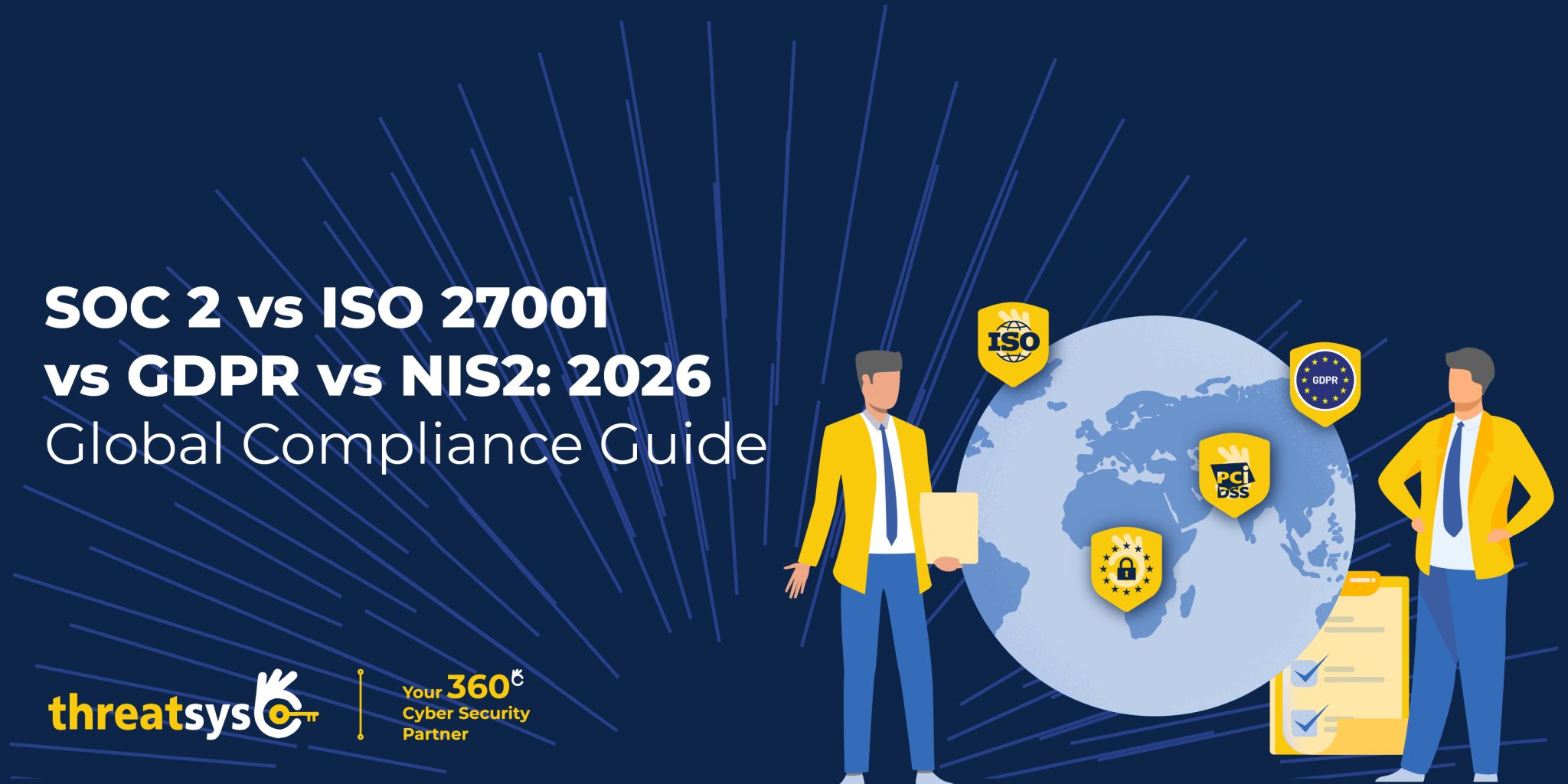

If you’re wondering which compliance framework to choose between SOC 2, ISO 27001, GDPR, and NIS2 in 2026, this guide breaks it down clearly.
SOC 2, ISO 27001, GDPR, and NIS2 serve different purposes in cybersecurity compliance:
- SOC 2 → Best for SaaS companies targeting US clients
- ISO 27001 → Global information security certification
- GDPR → Mandatory for handling EU personal data
- NIS2 → Cybersecurity regulation for critical sectors in the EU
In short: Choose SOC 2 for customer trust, ISO 27001 for global credibility, and GDPR/NIS2 for legal compliance.
In 2026, cybersecurity compliance has evolved into a core business requirement rather than just a regulatory obligation. Organizations are no longer only protecting systems—they are safeguarding trust, ensuring regulatory alignment, and enabling global scalability.
Frameworks like SOC 2, ISO 27001, GDPR, and NIS2 play a critical role in this landscape. However, despite being closely related, each serves a unique purpose. Understanding how they differ—and how they work together—is essential for building a strong and scalable compliance strategy.
SOC 2 – Ensuring Customer Trust Through Controls
SOC 2 is designed to evaluate how effectively an organization manages customer data. It is widely adopted by SaaS companies and service-based organizations that need to demonstrate reliability and security to clients.
Rather than focusing only on documentation, SOC 2 validates how controls perform in real-world operations.
Key Highlights:
- Focuses on trust service criteria like security and confidentiality
- Provides Type I and Type II audit reports
- Builds strong credibility with clients and partners
ISO 27001 – Building a Strong Security Foundation
ISO 27001 provides a structured framework for managing information security through an Information Security Management System (ISMS). It is globally recognized and suitable for organizations of all sizes.
It goes beyond audits by embedding security into everyday business processes.
Key Highlights:
- Risk-based approach to information security
- Covers people, processes, and technology
- Results in globally accepted certification
GDPR – Protecting Personal Data and Privacy
GDPR is a legal regulation that governs how organizations collect, process, and store personal data of EU citizens. Its global applicability makes it one of the most impactful data protection laws.
It emphasizes transparency, accountability, and user rights.
Key Highlights:
- Applies to any organization handling EU data
- Focuses on consent, data rights, and lawful processing
- Imposes strict financial penalties for violations
NIS2 – Driving Cyber Resilience at Scale
NIS2 expands the European Union’s cybersecurity framework to strengthen resilience across critical and essential sectors.
It shifts the focus from compliance alone to proactive risk management and accountability.
Key Highlights:
- Targets sectors like healthcare, energy, and digital infrastructure
- Requires incident reporting and risk management
- Holds leadership accountable for cybersecurity practices
SOC 2 vs ISO 27001 vs GDPR vs NIS2 – Key Differences
|
Feature |
SOC 2 | ISO 27001 | GDPR | NIS2 |
| Type | Audit Report | Certification | Regulation | Regulation |
| Region | USA | Global | EU | EU |
| Focus | Data controls | ISMS | Data privacy | Cyber resilience |
| Mandatory | No | No | Yes | Yes |
| Audience | SaaS/Tech | All industries | Any handling EU data | Critical sectors |
| Output | Report | Certificate | Legal compliance | Legal compliance |
Which Compliance Framework Should You Choose in 2026?
Choosing the right framework depends on your business model, target market, and regulatory exposure:
- SaaS & Tech Companies: SOC 2 is ideal for building trust with US clients
- Global Organizations: ISO 27001 provides a strong and scalable foundation
- EU Data Handling Businesses: GDPR compliance is mandatory
- Critical Sectors in EU: NIS2 is required for cybersecurity resilience
Best Approach:
Most modern organizations adopt a layered compliance strategy, combining multiple frameworks to meet both regulatory and business requirements.
Compliance Roadmap (Simplified Approach)
To successfully implement compliance frameworks:
- Conduct a gap assessment
- Define policies and controls
- Implement security measures
- Perform risk assessments
- Prepare for audits or regulatory checks
- Continuously monitor and improve
How Threatsys Supports Your Compliance Journey
At Threatsys, compliance is not treated as a one-time task—it is implemented as a continuous and scalable process aligned with business growth.
Our approach ensures that organizations not only meet compliance requirements but also strengthen their overall cybersecurity posture.
Threatsys Enables Organizations Through:
- Comprehensive gap assessment across SOC 2, ISO 27001, GDPR, and NIS2
- End-to-end implementation support (policies, controls, documentation)
- Risk assessment aligned with global standards
- Audit readiness for SOC 2 and ISO 27001 certification
- GDPR data protection and privacy consulting
- NIS2-focused resilience and incident response planning
- Continuous monitoring and improvement
This structured approach helps organizations reduce complexity, accelerate compliance timelines, and achieve long-term security maturity.
Conclusion
SOC 2, ISO 27001, GDPR, and NIS2 are not competing frameworks—they are interconnected elements of a modern cybersecurity strategy.
In 2026, organizations that adopt a proactive and integrated compliance approach will not only meet regulatory expectations but also gain a competitive advantage through enhanced trust, scalability, and resilience.
Stay secure, stay aware with Threatsys.
Frequently Asked Questions (FAQs)
1. What is the difference between SOC 2, ISO 27001, GDPR, and NIS2?
SOC 2 is an audit report focused on data controls, ISO 27001 is a global certification for information security management, GDPR is a data privacy regulation, and NIS2 focuses on cybersecurity resilience in the European Union.
2. What is the difference between SOC 2 and ISO 27001?
SOC 2 evaluates operational controls through audits, while ISO 27001 provides a structured framework for managing information security through certification.
3. Is GDPR mandatory for all companies?
GDPR is mandatory for any organization that processes or handles personal data of EU citizens, regardless of where the company is located.
4. Does ISO 27001 cover GDPR or NIS2 requirements?
ISO 27001 supports many security controls but does not fully replace GDPR or NIS2 compliance requirements.
5. Which compliance framework should you choose in 2026?
The right framework depends on your business needs: SOC 2 for SaaS companies, ISO 27001 for global security standards, GDPR for data privacy compliance, and NIS2 for cybersecurity regulations in the EU.
6.Is NIS2 mandatory for all organizations?
NIS2 is mandatory for organizations operating in critical and essential sectors within the European Union, such as healthcare, energy, and digital infrastructure.